A clogged main sewer line backs up every drain in the house at once, and running a $20 store-bought snake down a single toilet won't fix it — here's the actual process for clearing the main line and knowing when to stop and call a licensed plumber.
- A main line clog shows up as multiple drains backing up at the same time, not just one slow sink.
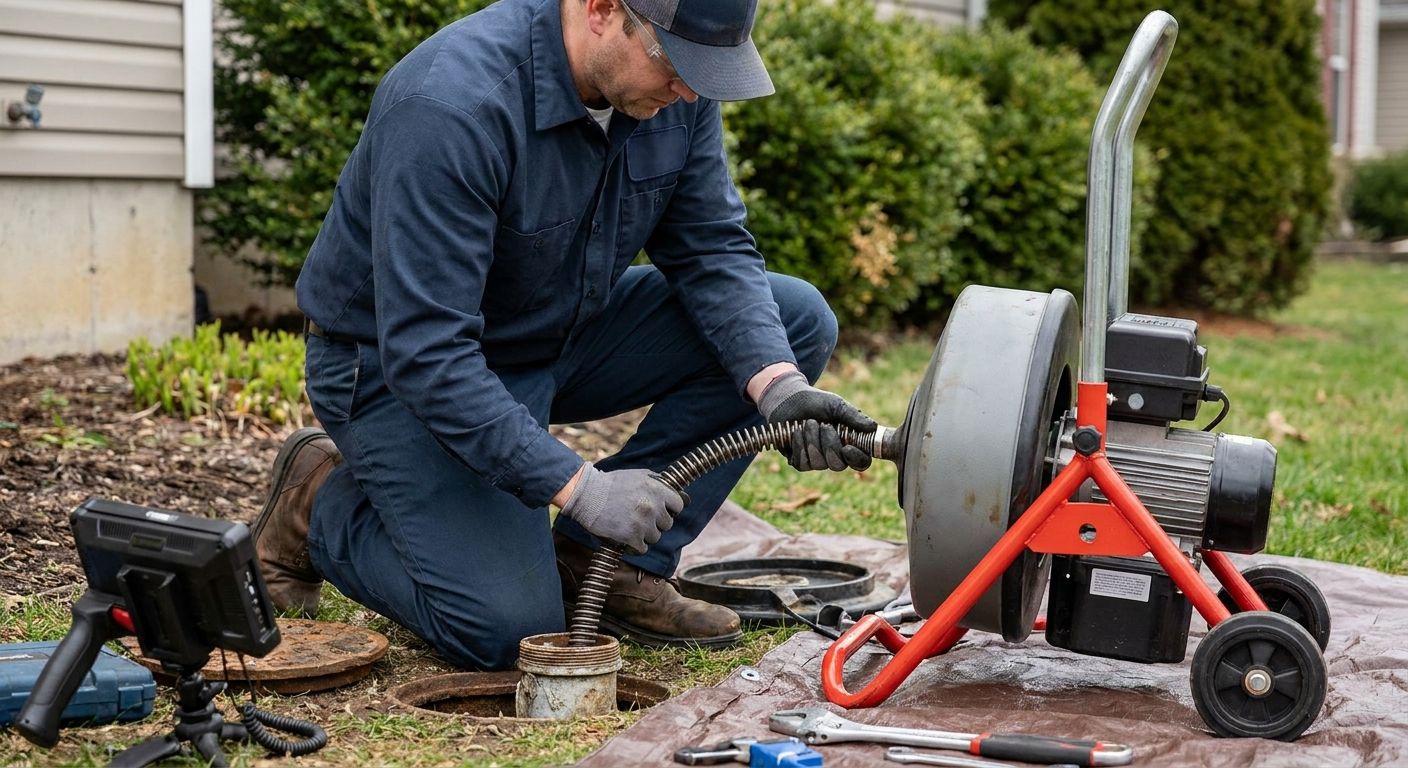
- A sewer auger with a 25 to 100-foot cable clears most root and grease blockages through the exterior cleanout.
- Hydro jetting at 3,000 to 4,000 PSI clears what an auger can't, but it's a job for a licensed plumber, not a rental unit.
- If the same clog returns within weeks, the pipe likely has a structural problem — a camera inspection settles it before you spend more money guessing.
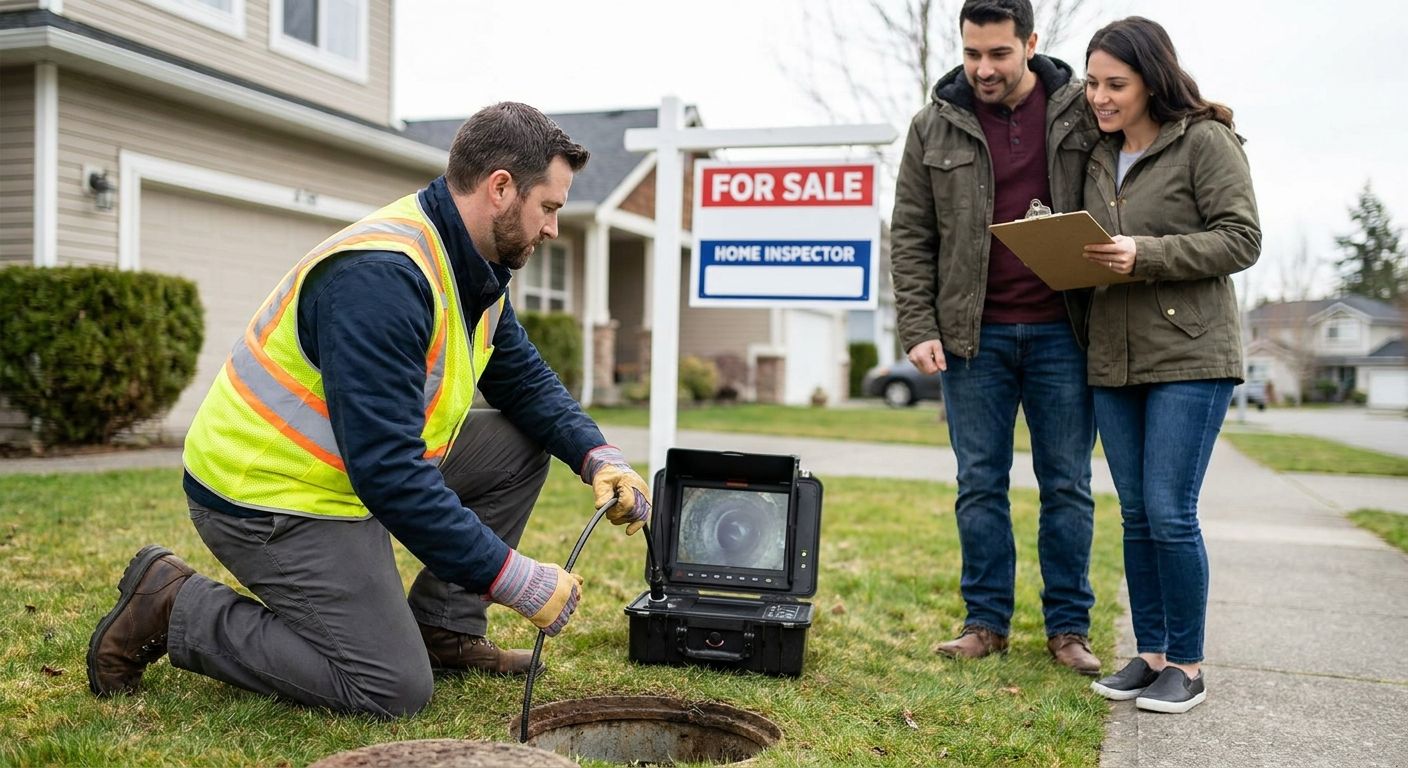
- Flores Precision Plumbing runs camera inspections on Sacramento sewer lines to confirm a clog is actually cleared, not just pushed further down the pipe.
Why this matters
A single slow drain is a local problem. Every drain in the house backing up, gurgling, or draining slowly at the same time means the blockage sits in the main line that carries waste from the house to the city sewer or septic tank.
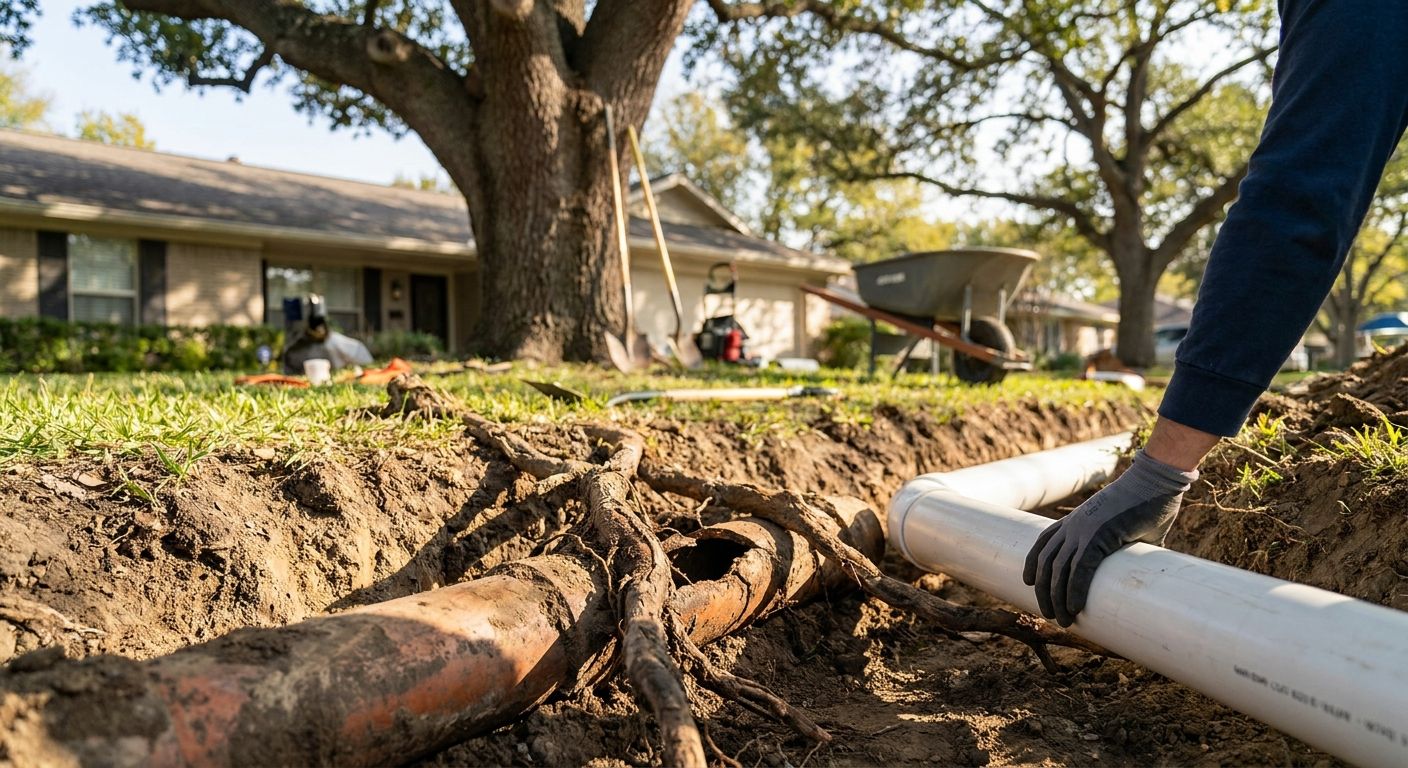
Ignoring it doesn't just mean inconvenience. Sewage backing up into a tub or floor drain in a Sacramento home built before the 1980s often means the clog is sitting on top of a bigger issue — root intrusion or a bellied pipe section that's been narrowing for years. Clearing the clog without checking what caused it is why some homeowners call a plumber three times in one year for the same sewer line.
What you'll need
- A flashlight and a pair of channel-lock pliers to open the cleanout cap
- A manual or motorized sewer auger (also called a drain snake) with at least 25 feet of cable
- Work gloves and eye protection — sewage backup is not something you want on bare skin
- A bucket and old towels for the cleanout overflow
- A garden hose for flushing once the line is clear
- A phone number for a licensed plumber, in case the clog doesn't clear or the pipe shows damage
Most Sacramento homes built before 2000 have an exterior cleanout — a capped pipe sticking a few inches out of the ground near the foundation or property line. If you can't find one, that's already a sign this job needs a professional, since accessing the line through a roof vent or interior fixture is harder and riskier.
The steps
1. Confirm it's actually a main line clog
Run water in one sink. If only that drain backs up, it's a local clog. If flushing the toilet makes water rise in the shower drain or the washing machine backs up when you run a load, the blockage sits downstream of where all those lines converge — the main line.
This distinction matters because clearing a local clog does nothing for a main line problem, and you'll waste an afternoon on the wrong fix.
Common mistake: running a small toilet auger and declaring the problem solved when the gurgling in other fixtures never actually stopped.
2. Locate and open the cleanout
Find the cleanout — a capped, threaded pipe fitting, usually white or black PVC, near the foundation, in the yard, or in a basement/crawl space. Use channel-lock pliers to loosen the cap counterclockwise, slowly, since pressure built up behind a clog can push wastewater out fast once the seal breaks.
Stand to the side when you crack the cap. Have the bucket ready to catch overflow.
Common mistake: opening the cleanout cap fully in one motion. Back it off a quarter turn first and let pressure release gradually.
3. Feed the auger cable into the line
Feed the sewer auger cable into the cleanout opening, cranking steadily as it advances. Most residential clogs sit somewhere in the first 25 to 50 feet from the house, which is why a cable in that length range clears the majority of blockages caused by grease, wipes, or root hair intrusion.
When you feel resistance, stop cranking forward and instead work the cable back and forth in short strokes to break through rather than force it, which can jam the cable or damage the pipe wall.
Expected outcome: a sudden give in resistance followed by water draining from the cleanout, which means you've broken through.
4. Pull the cable back slowly and check what it caught
Retract the cable slowly rather than yanking it out. Roots, wipes, and grease buildup often cling to the auger head, and pulling too fast can drop debris back into the line.
What comes back on the cable tells you something: stringy root matter usually means the clog will return within months unless the roots are cut back properly or the section is relined. Grease and soap buildup is a maintenance issue, not a structural one.
5. Flush the line and test every fixture
Run water from a garden hose into the cleanout for several minutes, then flush every toilet and run every sink and the washing machine in sequence. If water moves freely through all of them and nothing backs up, the main line is clear for now.
Replace the cleanout cap hand-tight, then snug it with the pliers — overtightening cracks the fitting.
6. Get a camera inspection if the clog was severe or recurring
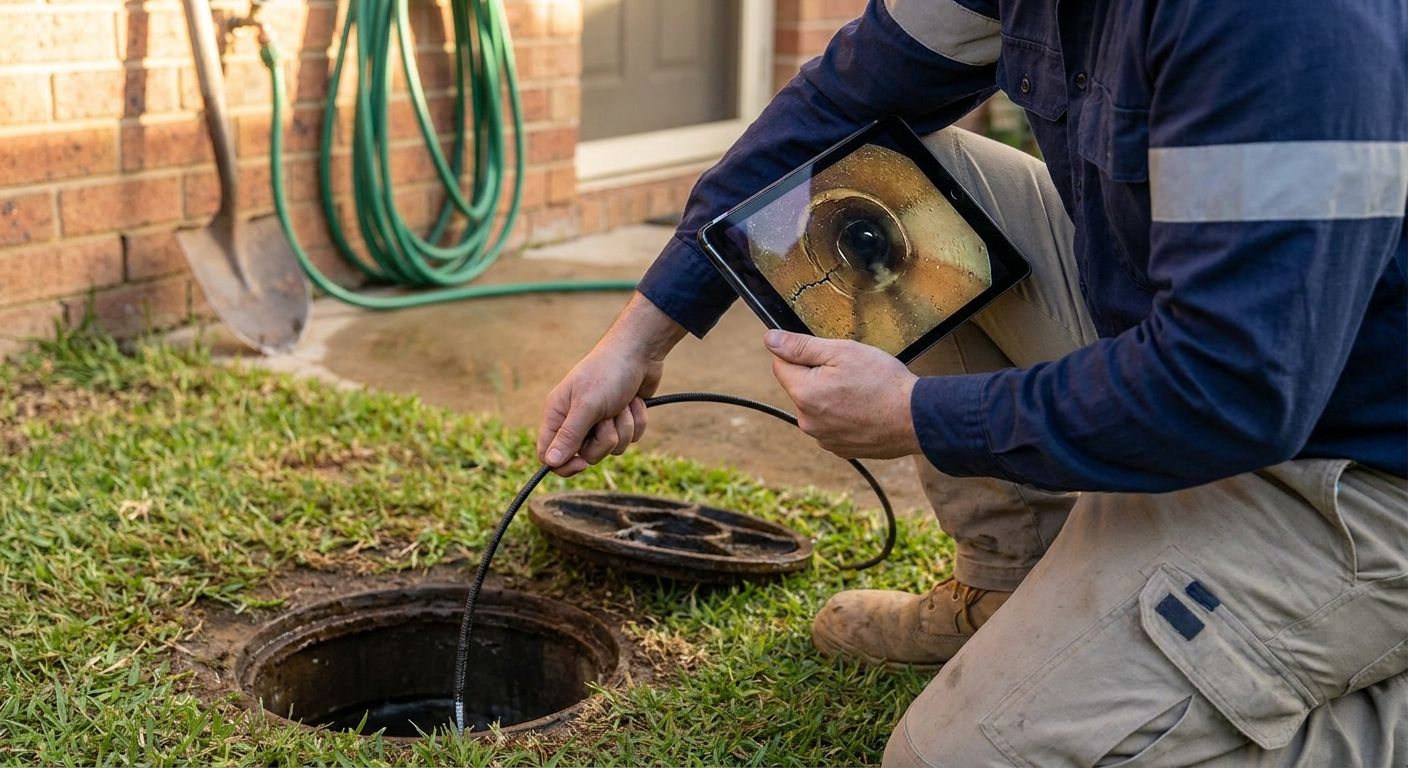
If the auger met heavy resistance, if roots came back thick, or if this is the second or third time in 2026 you've cleared the same line, a camera inspection is the only way to see what's actually happening inside the pipe. It shows whether you're dealing with a simple root cluster, a bellied section holding standing water, or a cracked joint that will keep clogging no matter how often you snake it.
Get a camera inspection scheduled
Confirm the clog is cleared and the pipe is sound before it backs up again.
Troubleshooting
- The auger stops at the same spot every time. That's usually a fixed obstruction — a pipe belly, an offset joint, or a partial collapse — not a clog. A camera inspection confirms it before you keep spending time on a snake.
- Water backs up into multiple drains again within a week. The clog wasn't fully cleared or roots have already regrown into the cut section. Trenchless sewer repair methods address root intrusion at the source instead of cutting it back repeatedly.
- Sewage smell lingers after the line is clear. Check for a dry trap somewhere in the house, or residue left in the cleanout from the backup — a hose flush usually resolves it.
- The cable comes back caked in grease with no roots. That's a maintenance pattern, not damage. Cutting back on grease disposal and running hot water flushes monthly reduces the frequency.
- The camera shows a bellied or sagging pipe section. An auger will clear it temporarily every time but never permanently, because the pipe itself holds standing water and debris. This needs repair, not repeat cleaning.
- Cleanout cap won't budge. Years of corrosion can seize a metal cap. Penetrating oil and time work better than force, which can shear the fitting and turn a clog into a bigger repair.
Tools and resources
- A manual or motorized sewer auger with 25+ feet of cable for DIY attempts
- A licensed plumber for hydro jetting, which runs 3,000 to 4,000 PSI and clears buildup an auger physically can't reach
- Camera inspection service to confirm the pipe condition, not just the immediate clog
- For homes with a documented history of root intrusion or collapsed sections, review trenchless sewer repair methods before scheduling a dig-and-replace job
What to do next
If you've cleared the line yourself and it's holding, the maintenance move for 2026 is scheduling a camera inspection every couple of years if your home has mature trees near the sewer path — root intrusion is progressive, not a one-time event. If the line is older or this is a repeat call, read through the guide on sewer line repair for older Sacramento homes before deciding between another cleanout and a full repair.
FAQ
What's the best way to unclog a main sewer line?
A sewer auger fed through the exterior cleanout clears most main line clogs caused by grease, wipes, or root hair. For heavier buildup or repeat clogs, hydro jetting at 3,000 to 4,000 PSI clears the pipe wall completely, but that job belongs to a licensed plumber.
How much does it cost to unclog a main sewer line?
Cost depends on clog severity, the length of cable or jetting time needed, and whether a camera inspection is required afterward. Get a same-day quote from a licensed plumber before assuming the cheapest option is the right fix.
Is a sewer auger better than hydro jetting?
An auger is faster and cheaper for a straightforward clog, but hydro jetting clears grease film and root hair along the entire pipe wall, not just a path through the blockage. Recurring clogs usually mean jetting is the better long-term move.
How do I know if my main sewer line is clogged versus a single drain?
If more than one fixture backs up at the same time — a toilet flush causing the shower to gurgle, for example — the clog is in the main line, not a branch line. A single slow drain with no effect elsewhere is usually local.
Can I unclog a main sewer line myself?
Yes, for straightforward clogs, with a sewer auger fed through the exterior cleanout. If the auger meets a fixed obstruction, if the clog returns within weeks, or if there's no accessible cleanout, the job needs a licensed plumber and likely a camera inspection.
How often should a main sewer line be cleaned?
Homes with mature trees near the sewer path often need cleaning every 1 to 2 years to stay ahead of root intrusion. Homes without heavy root exposure can go longer between cleanings if drains are running normally.
What causes a main sewer line to clog?
Root intrusion through pipe joints, grease and soap buildup, and flushed wipes or paper towels account for most main line clogs. Older Sacramento homes with clay or Orangeburg pipe are more prone to root intrusion because those materials have looser joints.
When should I call a plumber instead of doing it myself?
Call a plumber if the auger meets resistance it can't push through, if the clog returns within a few weeks, or if you can't locate an exterior cleanout. Those situations usually point to a structural pipe issue that repeated snaking won't fix.
One last thing
The cable pulling back clean the first time doesn't mean the pipe is fine — it means the clog is gone for now. Homes in Sacramento with clay or Orangeburg sewer pipe from before the 1970s clog from root intrusion at a predictable rate, and Flores Precision Plumbing sees the same properties call back within a year when a camera inspection was skipped the first time around. The camera costs less than the second service call.