Slow drains, gurgling toilets, and a sewage smell in the yard are not random nuisances — they are the sewer line telling you it is failing, and catching the signs before 2026 turns into an expensive spring is what separates a $400 repair from a $15,000 excavation.
- Three or more drains backing up at once points to the main line, not a single clogged fixture.
- Sewage odor outdoors combined with a lush green strip in the yard usually means a leak underground.
- Homes with clay or cast iron pipe built before 1970 face the highest failure risk in 2026.
- A camera inspection is the only way to confirm signs you need sewer line repair before digging.
- Flores Precision Plumbing recommends trenchless repair for cracked or root-invaded lines under most Sacramento yards.
Why this matters
A sewer line failure rarely announces itself with one dramatic event. It shows up as a slow drain here, a bad smell there, and homeowners write it off as "old house stuff" until sewage backs up into a bathtub.
By the time raw sewage surfaces in the yard or the basement, the pipe has usually been cracked, root-clogged, or partially collapsed for months. Sacramento's older neighborhoods still run a lot of original clay and cast iron sewer pipe, and that material is now well past the point where problems are rare. Reading the early signs saves money and stops a plumbing issue from becoming a public health one. Flores Precision Plumbing walks Sacramento homeowners through exactly what to check before calling anyone out.
What you'll need
- A flashlight and a notebook or phone to log which drains act up and when
- Access to your main cleanout, usually a capped pipe near the foundation or in the yard
- 15-20 minutes to run water through every fixture in the house back to back
- A camera inspection scheduled with a licensed plumber once you spot two or more warning signs
- Knowledge of your home's build year — pipe material and age drive most sewer line failures
The diagnostic steps
1. Test every drain in one sitting
Run water in the kitchen sink, then flush every toilet, then run the shower, all within a 20-minute window. This flushes the whole system at once instead of testing fixtures in isolation.
If only one sink drains slowly, that is usually a local clog. If the toilet gurgles when the washing machine drains, or if three or more fixtures back up together, the blockage sits in the main line, not a branch pipe. Common mistake: stopping after the first slow drain and assuming it is fixed with a $10 bottle of drain cleaner — that masks a main line problem for weeks.
2. Listen for gurgling and air pockets
Flush a toilet and listen for a gurgle from a nearby tub or sink drain. That sound means air is trapped in the line because something downstream — a clog, a root mass, a partial collapse — is blocking normal flow.
Gurgling that happens every time you run the dishwasher or washing machine is a stronger signal than an occasional burp. Log the pattern for a few days before deciding it is one-off.
3. Walk the yard for wet spots and green strips
Walk the path your sewer line likely takes from the house to the street connection. Look for a strip of grass that is noticeably greener or growing faster than the rest of the lawn, soggy ground with no recent rain, or a dip forming in the soil.
A leaking sewer line acts as fertilizer, which is why the grass above it often outgrows everything around it. Expected outcome: if you find a wet or unusually lush strip, mark it — a plumber will want that exact location for the camera inspection.
4. Check for sewage odor indoors and outdoors
Stand near floor drains, cleanouts, and any exterior spot where you noticed wet ground, and smell for sewage rather than mildew or standing water. A cracked or disconnected sewer line lets gas escape before it ever reaches a fixture.
Odor that comes and goes with weather, especially stronger after rain, points to a pipe that is cracked underground and filling with groundwater. Common mistake: homeowners spray air freshener and move on instead of tracing where the smell is strongest.
5. Inspect the foundation and nearby pavement
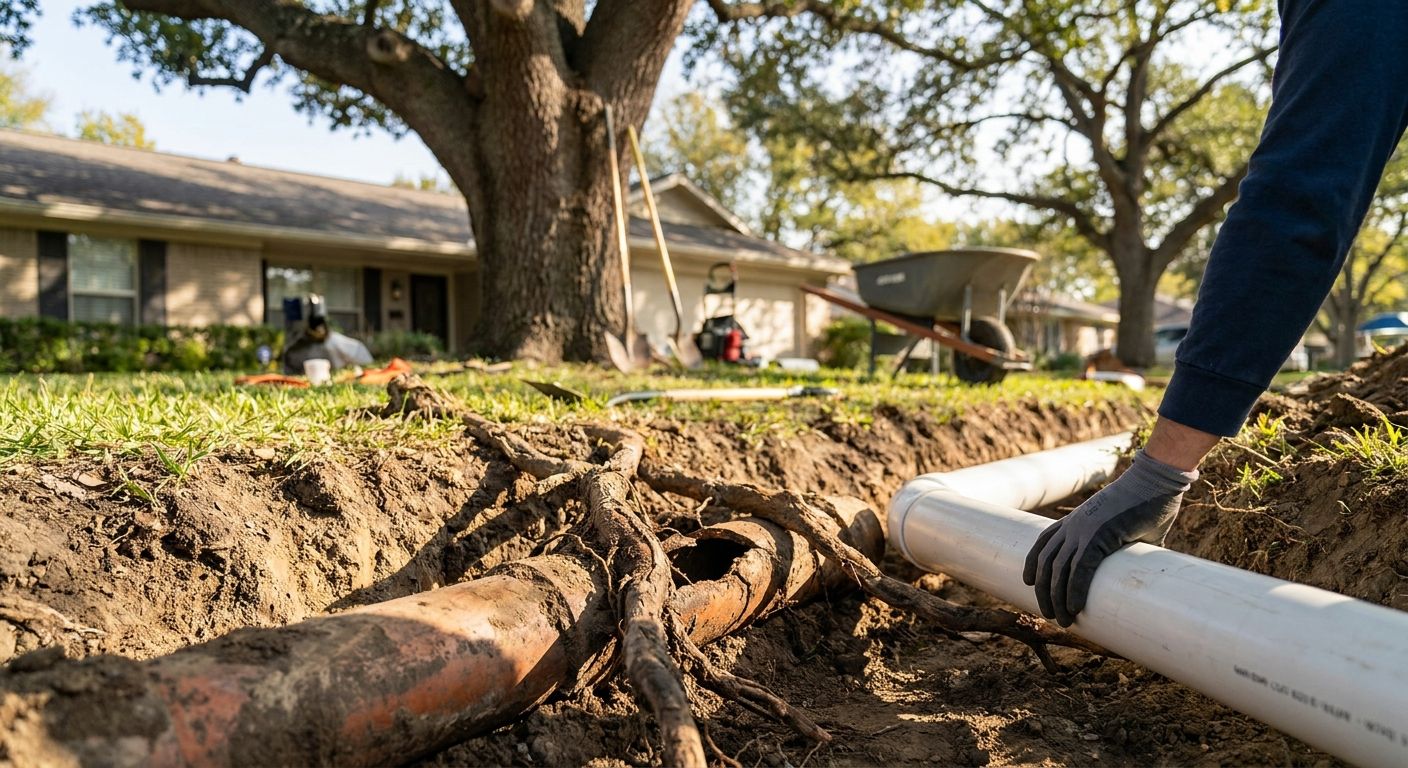
Look for new cracks in the foundation, driveway, or walkway near where the sewer line runs. Tree roots searching for moisture around a leaking pipe can shift soil enough to crack concrete within a few growing seasons.
A sinkhole or a soft spot you can push your foot into near the cleanout is a sign the pipe has already partially collapsed underneath. Do not drive over it or run heavy equipment nearby until it is inspected.
6. Know your pipe material and build year
Pull your home's build permit or ask your plumber to check the material at the cleanout. Clay sewer pipe, common in homes built before 1970, typically lasts 50 to 60 years before joints separate and roots get in. Cast iron pipe generally holds up 75 to 100 years but corrodes from the inside, narrowing the flow path long before it fails outright.
If your home falls into either window in 2026, treat any of the signs above as urgent rather than wait-and-see. Sewer line repair for older Sacramento homes covers what to expect specifically for pre-1970s pipe.
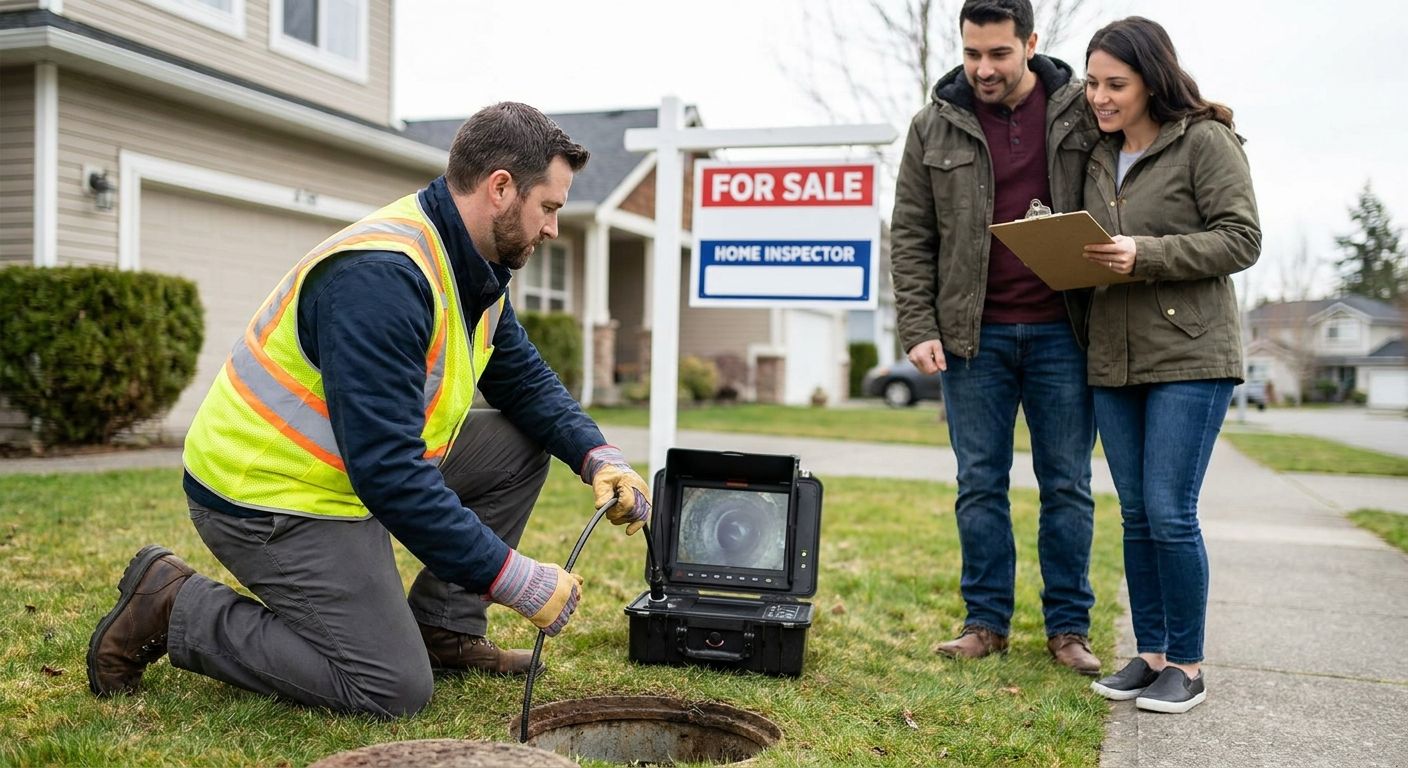
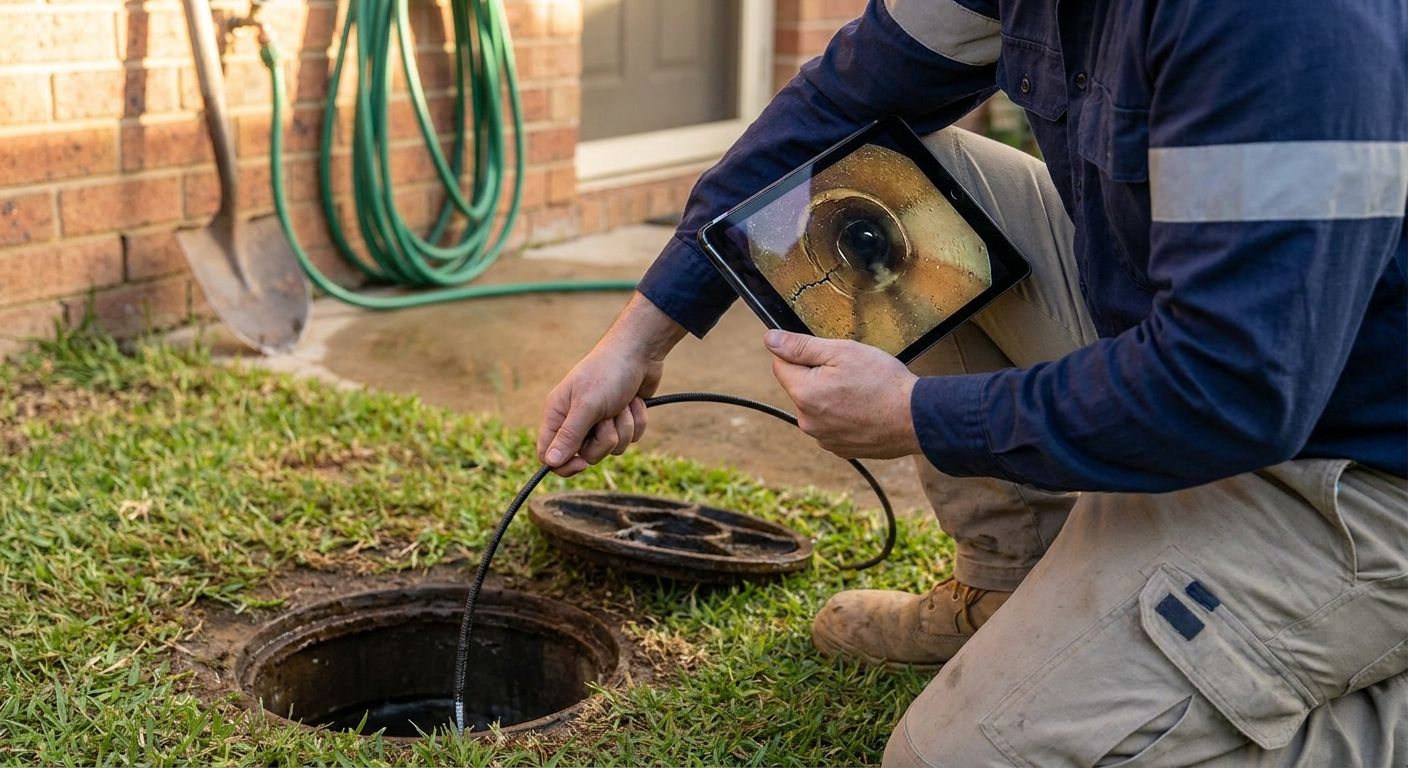
7. Schedule a camera inspection to confirm
A camera run down the line is the only step that turns guesswork into a diagnosis. It shows exactly where a crack, root ball, or collapse sits and how far the damage runs, which determines whether a spot repair or a full trenchless line replacement makes sense.
Bring your notes from steps 1-6 to the appointment — the more specific you can be about which drains, which smells, and which yard spot, the faster the plumber narrows down the search.
Get your sewer line inspected
Flores Precision Plumbing serves Sacramento homeowners with camera inspections and repair quotes.
Troubleshooting specific scenarios
Only one drain backs up, nothing else. That is a local fixture clog, not a main line issue — snake that drain before assuming the worst.
Toilet gurgles only when the washing machine runs. The two share a drain branch; this is often a partial blockage at the branch-to-main junction rather than full sewer line failure.
Sewage smell appears only after heavy rain. Groundwater is likely entering through a cracked joint, which lets gas and water trade places under pressure — this needs a camera inspection, not a deodorizer.
Green strip runs in a straight line across the yard. That straight-line pattern almost always tracks the sewer line path itself, which narrows down where the leak sits before anyone digs.
Multiple drains back up at once, repeatedly, over weeks. This is the clearest sign you need sewer line repair rather than a simple clog — schedule an inspection instead of repeating drain cleaner treatments.
Old cast iron pipe, home built before 1980, recurring slow drains. Corrosion has likely narrowed the pipe interior; repeated clearing without lining or replacement is a short-term fix at best.
Tools and resources
- Camera inspection from a licensed Sacramento plumber to confirm location and severity
- Best trenchless sewer repair methods for homeowners for repair options that avoid tearing up the yard
- Permit records from the county to confirm your home's build year and original pipe material
- A notebook log of dates, fixtures, and smells to hand a plumber at the first appointment
What to do next
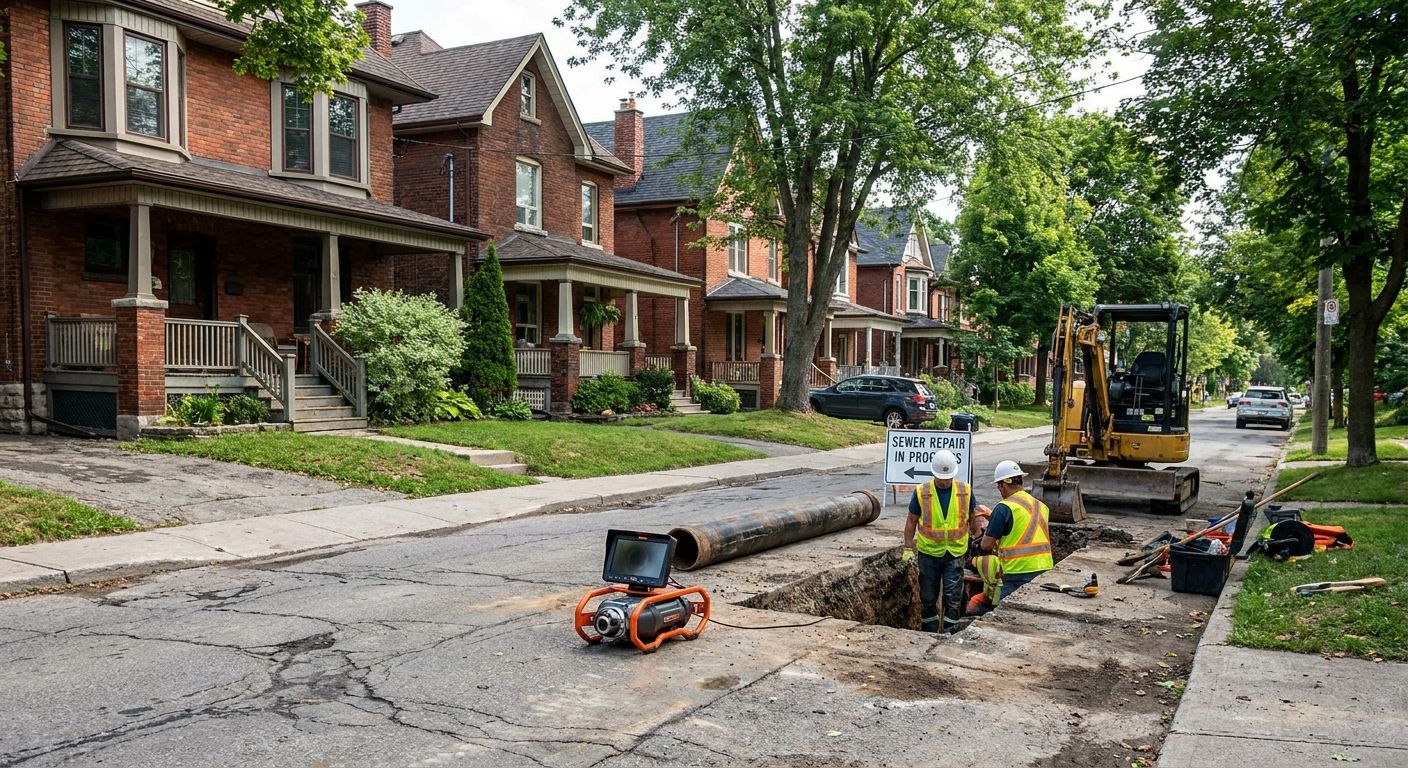
Once you have confirmed two or more of the signs above, the next decision is repair method — dig-and-replace versus trenchless lining or pipe bursting. Trenchless methods now handle most crack and root-intrusion cases without excavating the whole yard, and the trenchless guide linked above breaks down which method fits which type of damage.
FAQ
What are the first signs you need sewer line repair?
Slow drains across multiple fixtures, gurgling toilets, and sewage odor near a cleanout or in the yard are the earliest signs you need sewer line repair. Catching these before a full backup happens keeps the repair smaller and cheaper in 2026.
How do I know if it's the sewer line or just a clogged drain?
If only one fixture is slow, it's usually a local clog; if three or more drains back up together or a toilet gurgles when another fixture runs, the problem sits in the main sewer line. A camera inspection confirms which one you're dealing with.
Can tree roots really break a sewer pipe?
Yes, roots grow toward the moisture and nutrients leaking from a cracked or loose pipe joint and widen the crack as they thicken. This is one of the most common causes of sewer line failure in older Sacramento yards with mature trees.
Is a green strip in the yard always a sewer line leak?
Not always, but a strip that is noticeably greener than the surrounding lawn and follows a straight line toward the street connection is a strong indicator of a leaking sewer line. Combine it with any odor or drainage issue before assuming it's just good soil.
How long do clay and cast iron sewer pipes last?
Clay sewer pipe typically lasts 50 to 60 years before joints separate, while cast iron generally holds up 75 to 100 years before internal corrosion narrows the flow path. Homes built before 1970 in Sacramento are the most likely to be approaching that limit in 2026.
Do I need to dig up my yard to fix a sewer line?
Not necessarily — trenchless repair methods like pipe lining or pipe bursting fix cracks and breaks through the existing access points in many cases. Full excavation is usually reserved for a collapsed section or a line that has shifted out of grade.
How urgent is a sewage smell in the yard?
Treat it as urgent — a sewage smell outdoors usually means the pipe is already leaking underground, not just clogged. Left alone, it can undermine soil near the foundation or a driveway within a few growing seasons.
Can I check for sewer line problems myself before calling a plumber?
Yes — running every drain in the house within a 20-minute window and walking the yard for wet spots or odor gives you enough information to describe the problem accurately. A camera inspection is still the only way to confirm the exact cause and location.
One last thing
The single biggest mistake homeowners make in 2026 is treating a slow drain with repeated bottles of chemical cleaner instead of logging the pattern across multiple fixtures — by the time three drains are backing up together, the pipe has usually been compromised for months, not days.