Ten minutes and a test strip tell you more about your home's plumbing than a year of guessing. If you're searching for how to test water hardness at home, the process is simple enough to do tonight, and the number you get back explains a lot about spotty dishes, dry skin, and a water heater that's aging faster than it should.
- Testing water hardness at home with a strip kit takes under 10 minutes and costs under $15 in 2026.
- Readings above 7 grains per gallon (gpg) mean hard water that's already stressing your plumbing.
- Digital TDS meters confirm strip results fast: under 120 ppm reads soft, over 180 ppm reads hard.
- Sacramento homes on private wells often test harder than homes on municipal supply.
- Retest every 6 months if you see scale, spotting, or dropping water pressure.
Why this matters
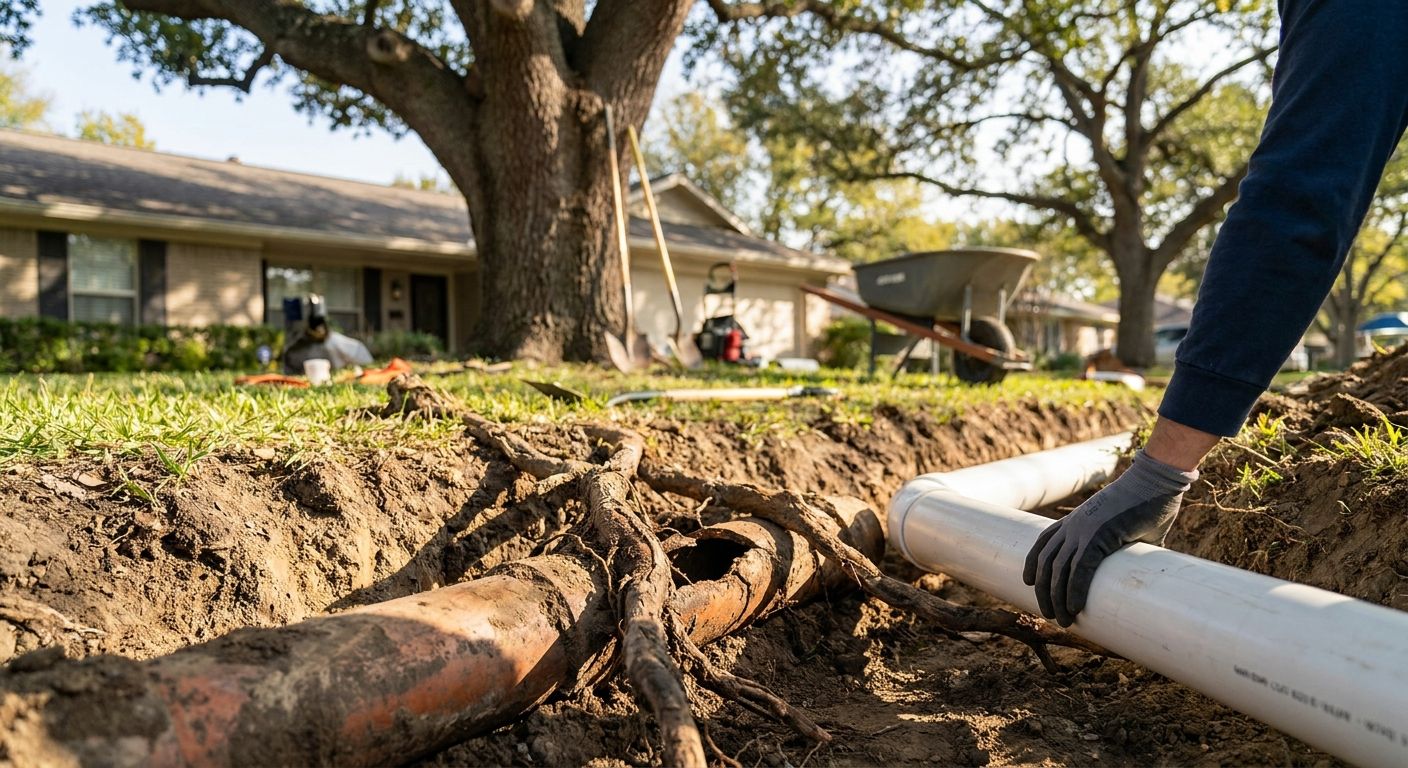
Hard water doesn't announce itself. It shows up as a white crust on your faucet aerators, a film on shower glass that won't scrub off, and a water heater that's working harder than it should to hold temperature. By the time you notice, mineral scale has usually been building inside pipes and fixtures for months.
Grains per gallon (gpg) is the standard measurement. Anything under 1 gpg is soft. From 1 to 3.5 gpg is slightly hard, 3.5 to 7 gpg is moderately hard, 7 to 10.5 gpg is hard, and anything past 10.5 gpg is very hard, per the USGS hardness classification. Sacramento homes on well water tend to land higher on that scale than homes on city supply, which is why water softener installation is one of the most common calls plumbers in this region get once a homeowner finally tests their water.
Knowing your gpg number before you shop for a softener or filtration system saves you from buying equipment sized wrong for your actual water.
What you'll need
- A water hardness test strip kit (drugstore or hardware store, under $15)
- A clean glass or cup for the sample
- A digital TDS (total dissolved solids) meter, optional but useful for cross-checking
- 5 to 10 minutes and access to a cold water tap
- Your water provider's most recent annual water quality report, if you're on municipal supply
The steps
1. Collect a fresh water sample
Run the cold tap for 30 seconds to clear stagnant water sitting in the line, then fill a clean glass. Testing warm water or water that's been sitting in a pipe overnight skews the reading, because minerals settle unevenly. A fresh cold sample gives you the number that actually reflects what's flowing through your home right now.
Common mistake: testing straight from a filtered fridge dispenser or a softener-treated line and assuming that's your raw water hardness.
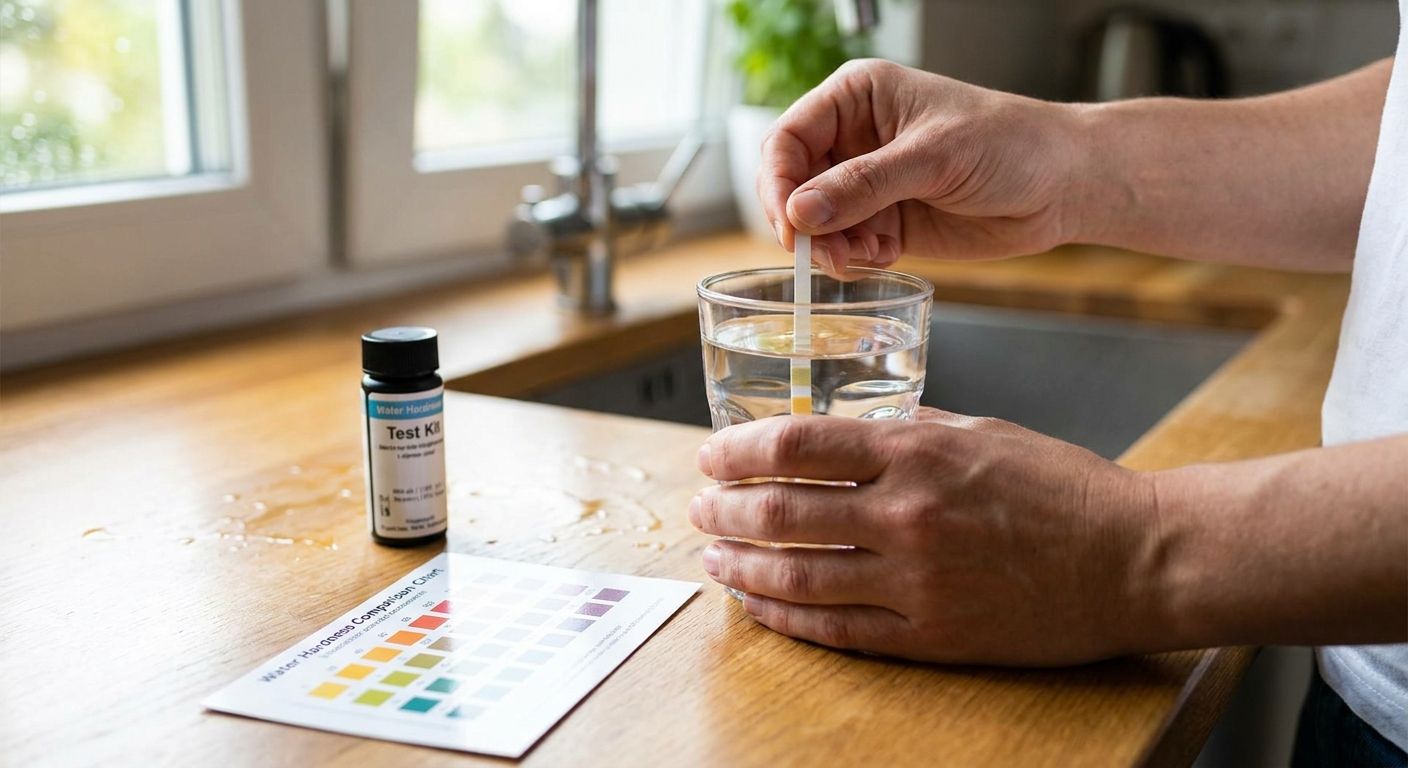
2. Test with a hardness strip
Dip the strip into the sample for the time listed on the package, usually 1 to 5 seconds, then hold it flat for 15 seconds before reading. The strip changes color based on calcium and magnesium concentration, and you match that color against the chart on the bottle. Most kits report results directly in gpg.
Common mistake: shaking excess water off the strip before it finishes reacting, which lightens the color and understates hardness.
3. Cross-check with a digital TDS meter
A TDS meter measures total dissolved solids in parts per million (ppm), which isn't the same as hardness but correlates closely enough to confirm a strip reading. Water under 120 ppm generally lines up with soft water, while readings over 180 ppm usually confirm hard water. If your strip says moderately hard and your meter reads 250 ppm, that's a consistent signal, not a conflict.
4. Compare readings to the USGS hardness scale
Line your gpg number up against the standard scale: under 1 gpg soft, 1 to 3.5 gpg slightly hard, 3.5 to 7 gpg moderately hard, 7 to 10.5 gpg hard, over 10.5 gpg very hard. One gpg equals about 17.1 mg/L of calcium carbonate, so if your kit reports in mg/L instead, divide by 17.1 to convert.
Common mistake: treating a single test as final. Test twice, a week apart, especially if your home is on a well.
5. Inspect fixtures for hardness clues
Check the aerator on your kitchen faucet and the showerhead in your most-used bathroom. White, chalky buildup around the openings is a visual confirmation of hard water, and it tends to show up once you're consistently above 7 gpg. Soap scum that won't rinse clean off shower walls is another sign worth noting alongside your test number.
6. Pull your water provider's annual quality report
If your home is on municipal water, your provider publishes an annual water quality report that lists hardness ranges for your service area. This won't replace your own test, since hardness can vary by neighborhood and by season, but it's a useful sanity check against your strip and meter results.
7. Decide your next move
A reading under 3.5 gpg means you likely don't need treatment. Between 3.5 and 7 gpg, a whole-house filtration system may be enough. Above 7 gpg, a water softener is the standard fix, and above 10.5 gpg, most plumbers in Sacramento recommend sizing a softener specifically for your household's water use and fixture count.
Get your hardness number verified
A plumber can confirm your test and size the right fix for your home.
Troubleshooting
Strip shows inconsistent colors between the two ends of the pad. Read each pad separately against its own reference chart line; some kits test hardness and chlorine on the same strip and the colors aren't meant to be compared to each other.
TDS meter reads unusually high, over 500 ppm. That can mean dissolved solids beyond calcium and magnesium, like iron or sediment, which is more common on private wells. A high TDS reading with a low hardness strip result points to something other than mineral hardness and is worth a closer look.
Well water hardness swings between tests. Groundwater levels shift with rainfall and season, so a well can test moderately hard in winter and hard in late summer. Test quarterly on a well instead of once and done.
Strip still reads hard water after a softener is installed. That usually means the softener's resin bed is exhausted, the bypass valve is open, or the unit needs a salt refill. Confirm the softener is actually in regeneration cycle before assuming your water hasn't changed.
Test result contradicts visible fixture buildup. Trust the physical evidence and retest. A strip that's expired or was stored in a humid bathroom cabinet can give a false low reading.
Tools and resources
- Test strip kits and TDS meters, available at most hardware stores
- Your municipal water provider's annual water quality report
- A whole-house filtration system sized for Sacramento tap water conditions
- A plumber's confirmation test if your reading falls in a borderline range between moderately hard and hard
What to do next
Once you have a confirmed gpg number, the next step is matching it to the right equipment instead of guessing at a size. How to choose a water softener for hard water homes walks through sizing a system against your household's daily water use and your tested hardness level.
FAQ
What's the best way to test water hardness at home?
A test strip kit is the fastest way to test water hardness at home, giving a gpg reading in under a minute. Cross-checking with a digital TDS meter confirms the result if the strip reading falls near a category boundary.
Is water hardness testing accurate with strips?
Strip kits are accurate within a reasonable range for household decisions, though they're not lab-precise. Testing twice a week apart and comparing to a TDS meter reading gives a more reliable picture than a single strip test.
What gpg is considered hard water?
Water testing between 7 and 10.5 grains per gallon is classified as hard, and anything above 10.5 gpg is very hard. Moderately hard water falls between 3.5 and 7 gpg.
Is Sacramento tap water hard?
Sacramento water hardness varies by neighborhood and source, with homes on private wells typically testing harder than homes on municipal supply. Checking your provider's annual water quality report alongside your own home test gives the most accurate picture.
Can I test hardness without buying a kit?
A rough indicator is soap that won't lather easily or leaves a film in the sink, both common signs of hard water. That's not a substitute for a real reading, since only a strip test or TDS meter gives you an actual gpg number.
How often should I retest my water hardness?
Retest every 6 months on municipal water, and quarterly if your home is on a private well. Hardness on wells shifts with rainfall and groundwater levels in ways municipal supply usually doesn't.
Does installing a water softener change my test results?
Yes, a properly functioning softener should bring your test reading down near 1 gpg or lower. If a strip test still shows hard water after installation, the softener likely needs a salt refill or a check on its regeneration cycle.
What's the difference between a water softener and a filtration system for hard water?
A water softener removes calcium and magnesium through resin and salt regeneration, directly lowering your gpg reading. A filtration system improves taste and removes sediment or chlorine but doesn't change hardness the way a softener does.
One last thing
Most homeowners test once, see a number, and stop there. The more useful habit is testing before and after any plumbing change, a new fixture, a softener install, a well pump repair, so you have a baseline to compare against if something changes later. A gpg number without a history to compare it to only tells half the story.