Sacramento tap water pulls from a blend of surface water and groundwater wells, and that mix means the right filtration system depends on which side of town your water comes from and what's actually building up on your fixtures. This guide ranks the filtration system types worth considering for Sacramento homes in 2026 and tells you which ones are overkill.
- A whole-house softener paired with carbon filtration is the safe pick for most Sacramento homes with visible scale or spotting.
- Reverse osmosis under the kitchen sink is the best water filtration system Sacramento homeowners can add for drinking water taste alone.
- Skip pitcher filters if you're dealing with whole-home hardness or chlorine odor — they don't touch either problem.
- UV purification only earns a spot on well-fed properties, not standard city-water connections.
Why this matters
Scale buildup inside a water heater tank cuts efficiency and shortens the unit's service life, and Sacramento's harder groundwater zones accelerate that process faster than homeowners expect. Chlorine and chloramine used for municipal disinfection also affect taste and can dry out skin and hair over time.
The filtration category is crowded with pitcher filters, big-box whole-house cartridges, and softener-filter combos, and most of the marketing doesn't tell you which one solves which problem. A softener treats hardness. A carbon filter treats taste and chlorine. Reverse osmosis treats drinking-water contaminants. They are not interchangeable, and buying the wrong one in 2026 means paying for a second install later.
How this ranking works
Each system type below is scored on three things that actually matter for a Sacramento property: whether it addresses hardness, whether it addresses chlorine/chloramine taste and odor, and whether it fits a typical single-family install versus a whole-house repipe situation. A licensed plumber pulling a water quality read at your meter is the only way to confirm which category your home actually needs — this list narrows the field before that conversation.
The ranked list
1. Whole-house water softener + carbon filtration combo
The safe pick for most Sacramento homes showing scale on faucets, cloudy glassware, or reduced water heater performance. A combo unit runs incoming water through a carbon media stage for chlorine taste and odor, then through a softening resin bed rated by grain capacity — most residential units are sized between 32,000 and 48,000 grains depending on household size and hardness level.
This setup protects every fixture and appliance in the house, not just one tap, and pairs directly with tankless or storage water heater performance — see best water heaters for hard water areas for how scale buildup shortens heater life. Sizing this correctly requires a hardness test, not a guess. Verdict: Buy for any Sacramento home with visible scale or a hardness reading above 7 grains per gallon.
2. Reverse osmosis under-sink system
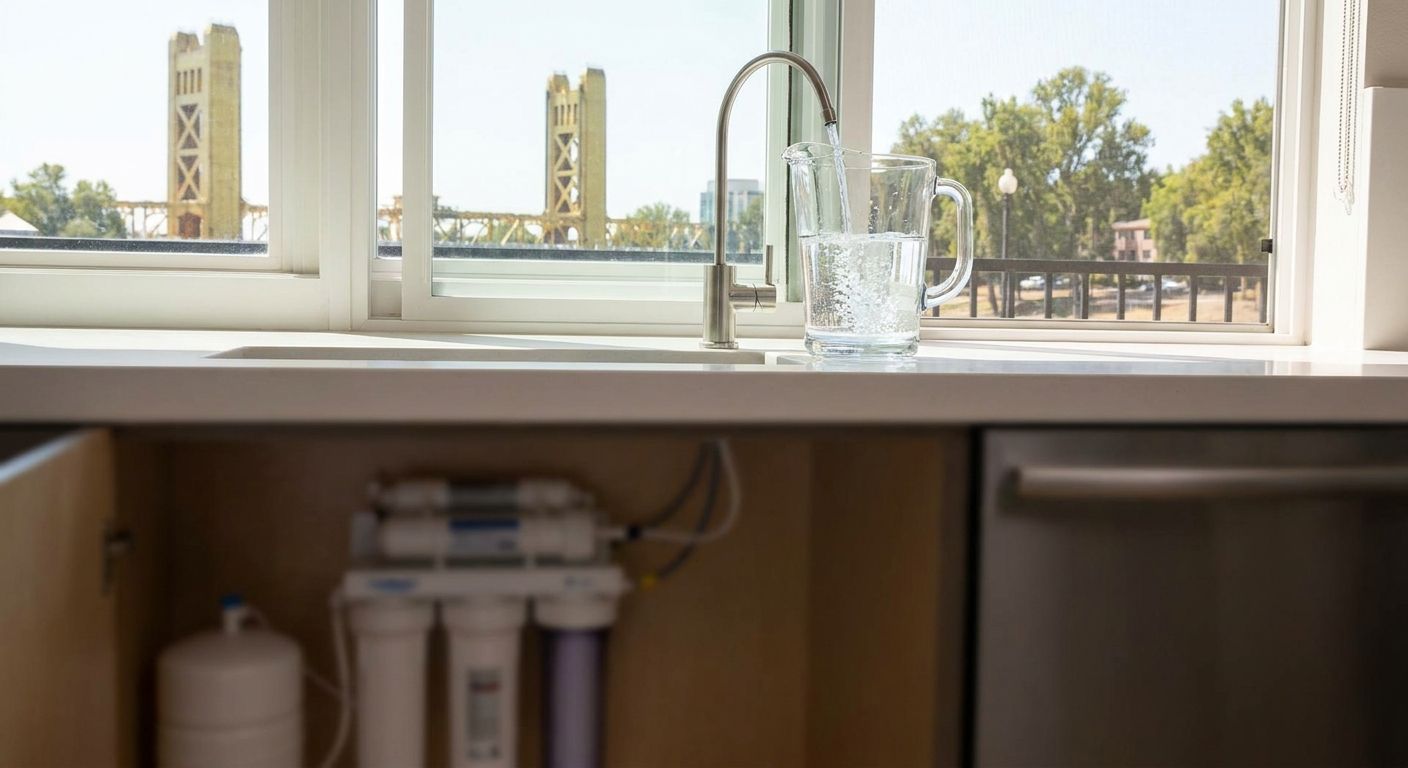
The drinking-water specialist. Reverse osmosis pushes water through a semi-permeable membrane rated to remove dissolved solids that carbon filtration alone can't touch, and it installs at a single point of use — typically the kitchen sink.
It does nothing for hardness at the shower or laundry line, so it's a companion to a whole-house system, not a replacement for one. Homeowners layering RO onto an existing softener setup should confirm how to choose a water softener for hard water homes before adding a second stage. Verdict: Buy if drinking water taste is the complaint; Skip if hardness is the actual issue.
3. Whole-house carbon/sediment filtration without softening
The budget-conscious middle ground. This setup strips chlorine taste, odor, and sediment particulate (typically filtered down to 1 micron) across every fixture, but it leaves mineral hardness untouched.
It works well for homes on the lower end of Sacramento's hardness range where scale isn't yet a visible problem, and it costs less to install than a full softener loop. Verdict: Consider for moderate-hardness homes; Hold if you're already seeing scale on fixtures, because you'll be back for the softener within a year or two anyway.
4. UV purification add-on
A narrow-use tool. UV systems neutralize bacteria and microorganisms by exposing water to ultraviolet light as it passes through a sealed chamber, and they're standard on private well systems where municipal disinfection isn't happening upstream.
Most Sacramento properties on city water don't need this layer since municipal treatment already handles microbial disinfection. Verdict: Buy only for well-fed properties; Skip for standard municipal connections in 2026.
5. Pitcher and faucet-mounted filters
The entry-level option, and the one most likely to disappoint. These units use a small carbon cartridge to improve taste at a single tap, but cartridge capacity is limited and replacement cadence is frequent to keep performance consistent.
They do nothing for whole-house hardness, nothing for water heater scale, and nothing for shower or laundry water quality. Verdict: Skip as a primary solution — treat it as a stopgap while you schedule a proper system, not a long-term fix.
Comparison table
| System type | Treats hardness | Treats taste/chlorine | Best for | Verdict |
|---|---|---|---|---|
| Softener + carbon combo | Yes | Yes | Whole-home scale issues | Buy |
| Reverse osmosis (under-sink) | No | Yes (drinking water) | Kitchen tap quality | Buy |
| Carbon/sediment only | No | Yes | Moderate hardness homes | Consider |
| UV purification | No | No | Well-fed properties | Buy (well only) |
| Pitcher/faucet filter | No | Limited | Single-tap stopgap | Skip |
Get a water quality read on your home
A hardness test tells you exactly which system size fits your Sacramento property.
Where to source your system
- Get a hardness test before buying anything. Grain-per-gallon readings determine softener resin capacity — guessing leads to undersized units that regenerate constantly or oversized units that waste salt.
- Match install to your existing plumbing, not the box store display model. A licensed plumber checks line pressure, bypass valve placement, and drain access before recommending a specific unit size.
- Bundle filtration with any planned repipe or water heater swap. If a whole-house repipe or water heater replacement is already on the calendar, installing filtration at the same time avoids opening walls twice — worth checking against water heater replacement for older Sacramento homes if your unit is aging out.
FAQ
What's the best water filtration system for Sacramento tap water?
A whole-house water softener paired with carbon filtration is the best water filtration system for most Sacramento homes in 2026 because it addresses both hardness and chlorine taste at every fixture. Homes without visible scale can start with carbon/sediment filtration alone.
Is a water softener the same as a water filtration system?
No, a softener only removes hardness minerals like calcium and magnesium, while filtration systems target chlorine, sediment, and taste. Many homes need both, combined in a single unit.
How much does whole-house water filtration cost in Sacramento?
Installed cost depends on system type, household size, and current hardness readings, so a home-specific quote from a licensed plumber is more accurate than a general estimate. Get a hardness test first to size the system correctly.
Do I need reverse osmosis if I already have a whole-house filter?
Yes, if drinking water taste is still a concern, because reverse osmosis targets dissolved solids that whole-house carbon filtration doesn't remove. The two systems solve different problems and work well together.
Is Sacramento tap water considered hard water?
Sacramento water quality varies by neighborhood and source, with groundwater-fed areas typically running harder than surface-water zones. A hardness test at your meter is the only way to confirm your specific reading.
Can I install a water filtration system myself?
Point-of-use pitcher and faucet filters are DIY-friendly, but whole-house softener and filtration systems involve line cutting, bypass valves, and drain connections that call for a licensed plumber. Improper installation risks leaks and voided warranties on the unit.
Does a filter remove chlorine taste from Sacramento water?
Carbon filtration removes chlorine taste and odor effectively, whether installed whole-house or at a single tap. Reverse osmosis systems also address this as part of their broader filtration stage.
How long does a water softener installation take?
A standard whole-house softener installation typically completes in a single day for most Sacramento homes, assuming existing plumbing doesn't require modification. Homes needing a repipe alongside the softener take longer.
One last thing
The detail most homeowners miss: installing a softener without first testing hardness is the single most common reason systems get replaced within two years — undersized resin beds regenerate too often and wear out faster than a correctly sized unit. Test before you buy, not after.