Water heater replacement for older Sacramento homes runs into problems newer construction never sees: undersized gas lines, galvanized pipe hiding behind the wall, and a utility closet built for a tank half the size code now expects.
- Tankless conversion wins for space-limited Sacramento homes once the gas line is upgraded to 3/4-inch — Buy in 2026.
- Like-for-like tank replacement stays the safe pick when the existing gas line and vent already pass code.
- Homes with original galvanized supply lines need a repipe alongside the water heater, not instead of it.
- Skipping seismic strapping on water heater replacement in older Sacramento homes fails inspection at resale.
- Tank units run 8-12 years; tankless units run 15-20 years, and Sacramento's hard water shortens both without maintenance.
Why this matters
Sacramento's building stock skews old. Homes in East Sacramento, Land Park, Curtis Park, and pockets of Elk Grove went up between the 1920s and 1960s, long before anyone sized a gas line for a 199,000 BTU tankless unit or ran a dedicated pressure-relief discharge line to current code. Swap the tank on a like-for-like basis and you might pass inspection without incident. Push toward a tankless water heater installation for Sacramento homeowners without checking the existing gas meter and line size first, and the unit under-fires or trips on cold-water complaints by the first cold snap.
The stakes are different in a 1948 bungalow than in a 2015 build. Older homes carry galvanized supply lines, smaller electrical panels, and water heater closets that were never meant to hold anything but a 30-gallon tank. Water heater replacement for older Sacramento homes in 2026 means matching the fix to what's actually behind the wall, not to whatever unit is cheapest at the supply house that week. Get that match wrong once and you're paying for the same job twice within five years.
Who this is for
This guide is for homeowners in houses built before 1985 whose water heater is failing, leaking, or already flagged during a home inspection. It's for anyone weighing a straight tank swap against a tankless upgrade before a remodel, and for owners who've noticed rust-colored water, a rotten-egg smell near the tank, or a pilot light that won't hold. If your house still has original galvanized supply lines or a water heater closet under 24 inches wide, the decisions below carry more weight than they do for a 2010 build with PEX plumbing and a 3/4-inch gas line already in place.
It's also for anyone planning a whole house repipe in the next few years. Timing a water heater replacement to land alongside that work, instead of ahead of it, avoids paying a plumber twice to access the same wall cavity.
What to look for in water heater replacement for older Sacramento homes
Gas line and vent sizing
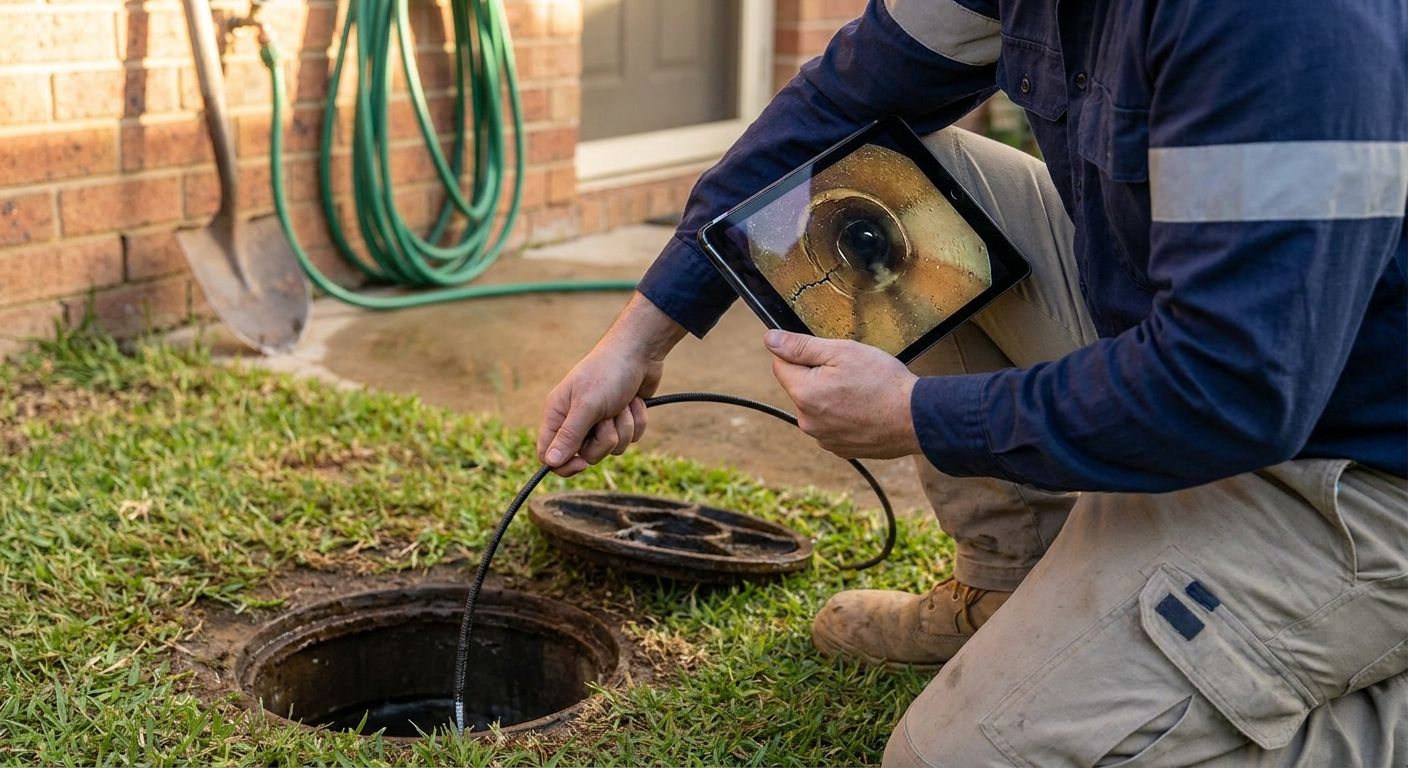
Older Sacramento homes often run a 1/2-inch gas line to the water heater closet, sized decades ago for a standard 40-gallon tank. Most tankless units need 3/4-inch minimum to hit full BTU input, and an undersized line causes the unit to underperform no matter how well the rest of the install goes. Check the line size and meter capacity before pricing tankless, not after the unit is already on the wall.
Seismic strapping and code compliance
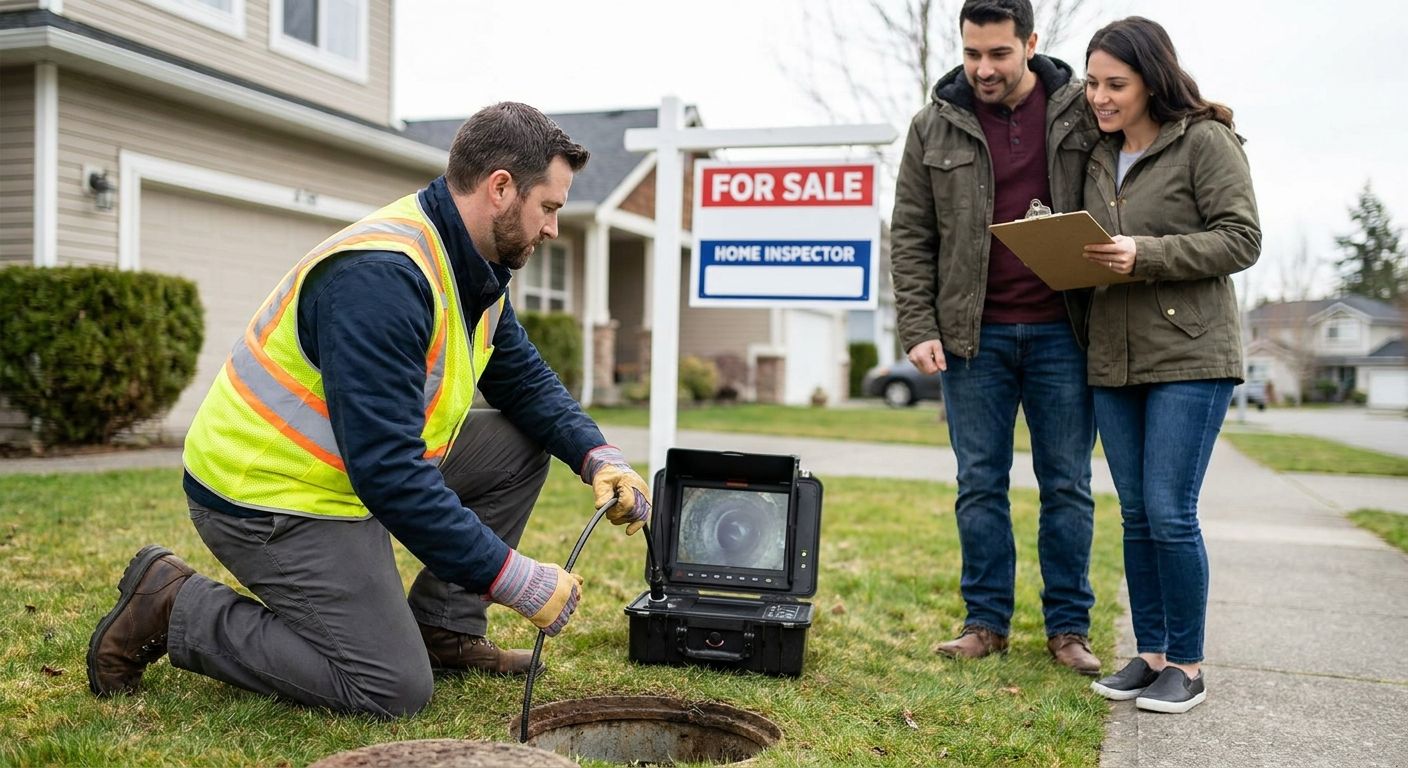
California requires seismic strapping on every water heater installation, tank or tankless, and older installs frequently show one strap instead of two, or none at all. An inspector flags this during a home sale or refinance in 2026, so raise it during the estimate instead of treating it as a change order later. It's a small line item next to a heater replacement, and it's the first thing that gets checked.
Pipe material behind the wall
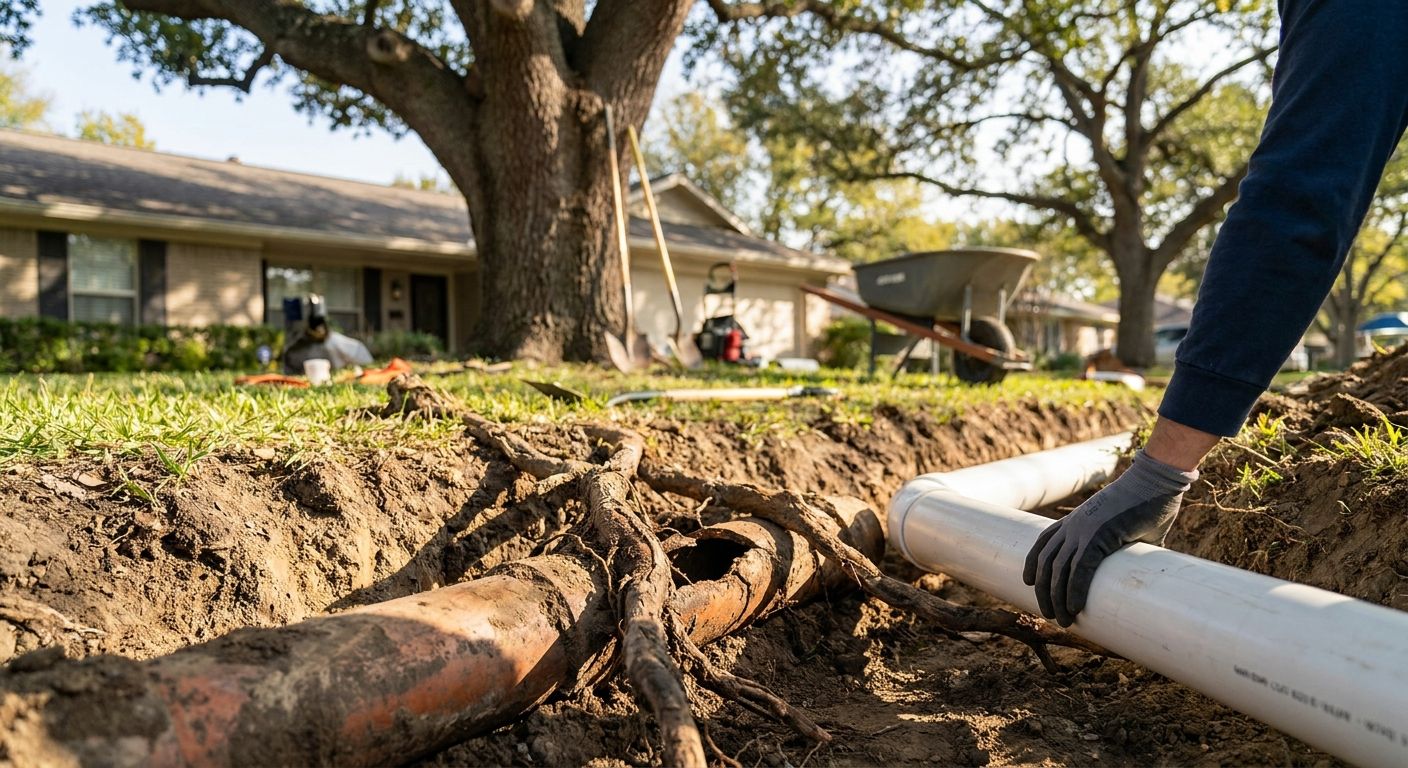
Homes built before 1960 commonly ran galvanized steel for hot and cold supply lines. Galvanized pipe corrodes from the inside and restricts flow long before it visibly leaks, which is why a brand-new water heater can still deliver weak hot water pressure at the fixtures. A repipe conversation belongs in the same estimate as the heater swap, not a separate project scheduled for someday.
Recovery rate versus household size
A 40-gallon tank that served a family of three in 1975 won't keep up with two teenagers and a dishwasher running back to back today. Recovery rate — how fast the unit reheats a depleted tank — matters more than raw tank size, and it's the spec most homeowners skip when comparing quotes side by side.
Water hardness and anode rod wear
Sacramento's water runs hard enough that sediment builds up faster in tank units here than it does in a soft-water region, which shortens anode rod life and accelerates tank failure from the inside out. Pairing replacement with a water softener sized for hard water homes extends the working life of whichever unit you choose, tank or tankless.
Space and clearance
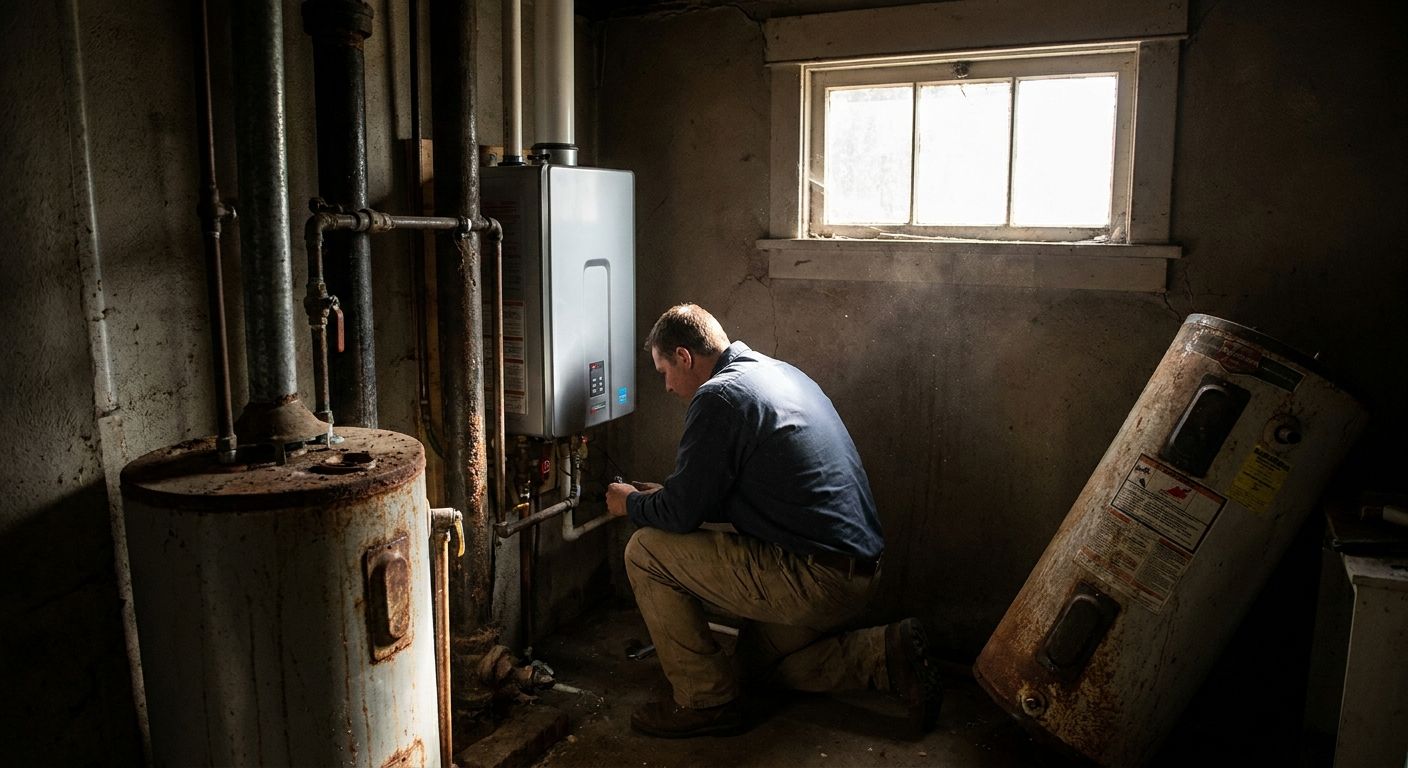
Original 1950s and 1960s utility closets were built around 30-gallon tanks with minimal clearance on every side. A larger tank or a tankless wall-mount changes that footprint, and the clearance question decides whether the job is a same-day swap or a half-day of carpentry before the plumbing work even starts.
Get a water heater replacement quote
Flores Precision Plumbing checks gas line size, pipe material, and closet clearance before quoting.
Top picks for older Sacramento homes
Four approaches cover most of the older housing stock in Sacramento. Here's how each one holds up once you factor in gas lines, pipe condition, and how long the household plans to stay put.
Tankless conversion — the space saver
A tankless unit frees up the entire utility closet and stretches service life to 15-20 years against 8-12 years for a tank. The catch in an older home is the gas line: budget for a line upsize if the existing run is under 3/4-inch, since that's the single most common reason a tankless retrofit underperforms. Households with two or more bathrooms drawing hot water at once see the biggest jump in day-to-day comfort. Verdict: Buy when the gas line can be upgraded and the home runs multiple bathrooms.
Like-for-like tank replacement — the safe pick
Swapping a failed 40 or 50-gallon tank for the same size keeps the job to a single day and avoids touching the gas line, vent, or closet framing. It's the right call when the existing setup already passes code and the household size hasn't changed. Read the full tankless vs traditional water heater comparison before assuming a straight swap is cheaper long-term — over a 15-year window, it usually isn't once you count a second replacement cycle. Verdict: Consider for homes selling within 3-5 years where resale value matters more than 15-year running cost.
Whole-house repipe paired with replacement — the long-term fix
Homes with original galvanized supply lines get more value out of pairing the water heater swap with a repipe than out of the heater alone, because a new heater feeding corroded pipe still delivers weak pressure at the tap. The approach mirrors new construction-grade water heater installation — lines sized correctly from the start, so the heater performs the way its spec sheet promises. Verdict: Buy for any home built before 1970 with visible rust or discoloration at the fixtures.
Tank or tankless plus water softener — the maintenance multiplier
For houses that burn through anode rods early or see scale buildup inside a tank within a few years, pairing the heater replacement with a softener addresses the cause instead of the symptom. It doesn't fix a failing unit today, but it changes how long the next one lasts, on either a tank or a tankless system. Verdict: Consider as an add-on to either replacement path, not as a standalone fix on its own.
What to avoid
- Cheapest matching-size tank with no anode rod or T&P valve check. It passes inspection today and fails a home sale in three years when the next buyer's inspector flags corrosion.
- Tankless installed on the original 1/2-inch gas line. The unit will underperform regardless of how good the installer is — the fix is upstream of the water heater itself.
- Treating the heater as the whole problem when galvanized pipe feeds it. Replacing the heater does nothing for corroded supply lines between the tank and the fixture; the weak pressure complaint comes right back.
Verdict comparison
| Approach | Lifespan | Upfront disruption | Gas line needs | Best for | Verdict |
|---|---|---|---|---|---|
| Tankless conversion | 15-20 years | Closet reconfig, possible line upsize | 3/4-inch or larger | Multi-bathroom homes, tight closets | Buy |
| Like-for-like tank | 8-12 years | Single day, no line changes | Existing line usually sufficient | Homes selling soon | Consider |
| Repipe + replacement | 15-20 years (heater) | Multi-day, opens walls | Sized correctly during repipe | Pre-1970 homes with galvanized pipe | Buy |
| Tank or tankless + softener | Extends either unit | Adds one softener install | No change to heater's line | Homes with fast anode rod wear | Consider |
FAQ
What does water heater replacement cost in an older Sacramento home?
Cost depends on whether the gas line, vent, or seismic strapping need updates alongside the heater itself. Get a quote after an inspection of the existing line and pipe condition rather than pricing off a generic number.
Is tankless worth it for an older Sacramento home?
Tankless is worth it once the gas line meets 3/4-inch minimum and the household runs multiple bathrooms. Skip it if the gas line can't be upgraded affordably, since an undersized line causes the unit to underperform.
How long does water heater replacement take in an older home?
A like-for-like tank swap takes a single day when the existing gas line and vent already pass code. A repipe paired with replacement runs multiple days because it opens walls to reach the old galvanized lines.
Do older Sacramento homes need a repipe before water heater replacement?
Homes with original galvanized supply lines benefit from pairing the repipe with the heater swap, since a new heater feeding corroded pipe still delivers weak pressure. Homes with copper or PEX supply lines usually don't need it.
How often should a water heater be replaced in Sacramento?
Tank water heaters typically last 8-12 years and tankless units run 15-20 years. Sacramento's hard water can shorten both timelines without periodic anode rod checks or a softener.
Is a permit required for water heater replacement in California?
Yes, California requires a permit for water heater replacement, including seismic strapping verification. Older homes with missing or single strapping get flagged during this inspection.
What's the difference between tankless and traditional water heaters for an older home?
Tankless units last longer and free up closet space but need a 3/4-inch gas line, which many older Sacramento homes don't have. Traditional tanks work with existing gas lines but need replacement roughly every 8-12 years.
Does Sacramento's hard water affect water heater lifespan?
Yes, hard water accelerates sediment buildup inside tank units and shortens anode rod life faster than it would in a soft-water region. A water softener paired with the replacement slows that wear on either a tank or tankless system.
One last thing
The detail most homeowners skip is seismic strapping. California requires two straps on every water heater installation, and a large share of pre-1990 Sacramento homes still have one strap or none. It's a minor addition next to a full replacement, and it's the first item a home inspector checks in 2026 — cheaper to fix now than to renegotiate during a sale.