Tree roots are the single most common cause of sewer line failure in older Sacramento neighborhoods, and by the time sewage backs up into a tub or toilet, the roots have usually been growing into the pipe for years. This guide breaks down which replacement method fits your yard, your pipe age, and your root damage — trenchless, spot repair, or full excavation — so you're not guessing when a plumber hands you three options in 2026.
- Sewer line replacement for homes with tree root damage favors trenchless pipe bursting over open-trench digging for most Sacramento yards in 2026 — Buy.
- CIPP pipe lining, rated for a service life near 50 years, is the low-disruption pick when the pipe still holds its round shape — Consider.
- Spot repair only fixes single-point root intrusion; skip it once three or more sections show damage on the camera inspection.
- Clay and Orangeburg sewer lines installed before the 1970s account for most root-intrusion failures in older Sacramento homes.
- Cutting roots with a mechanical auger buys time but never stops regrowth at a cracked joint — treat it as a stopgap, not a fix.
Why this matters
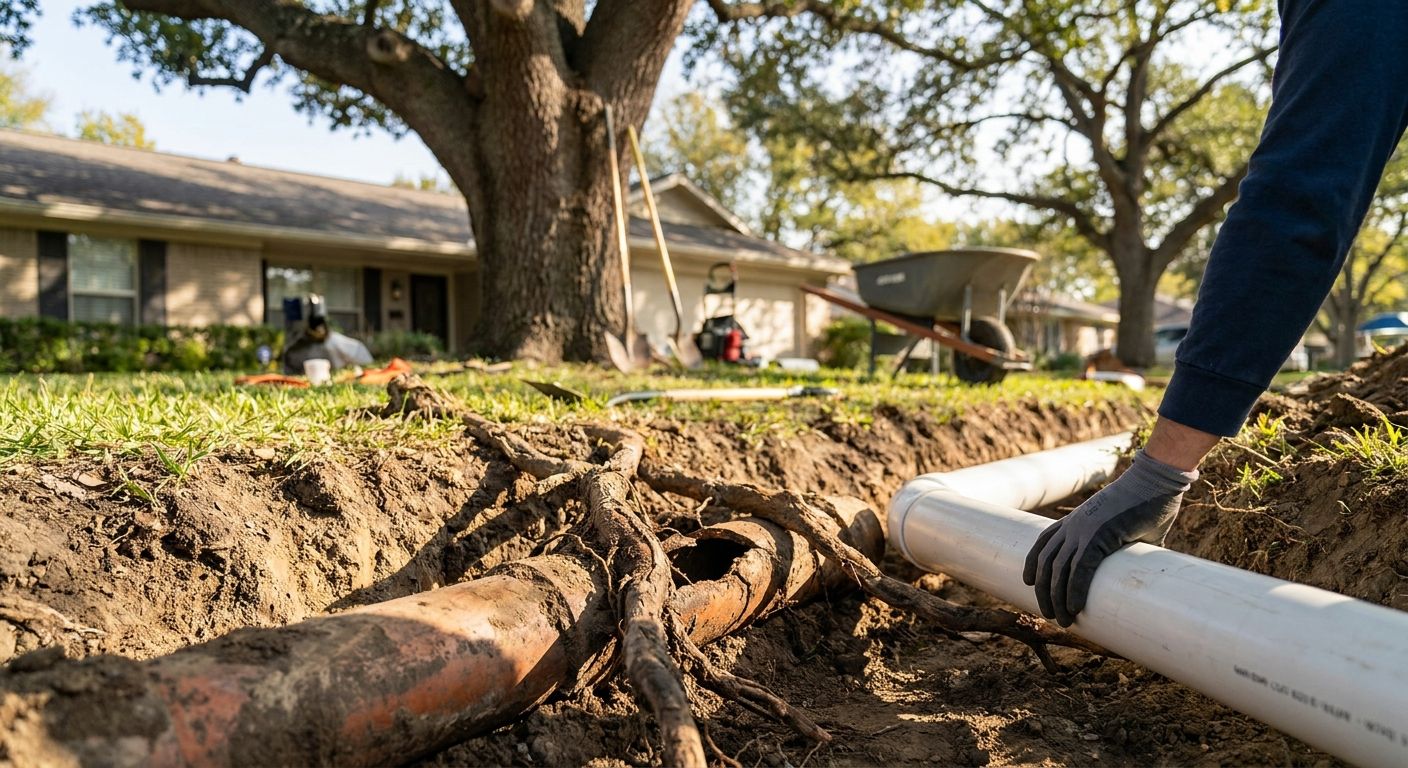
Roots don't crush a sewer pipe from the outside — they find a hairline crack, a loose joint, or a seam in old clay or Orangeburg pipe and grow toward the moisture and nutrients inside. Once a root mass is established, hydro-jetting or a mechanical snake clears the blockage for a few months, but the entry point stays open and the roots come back thicker.
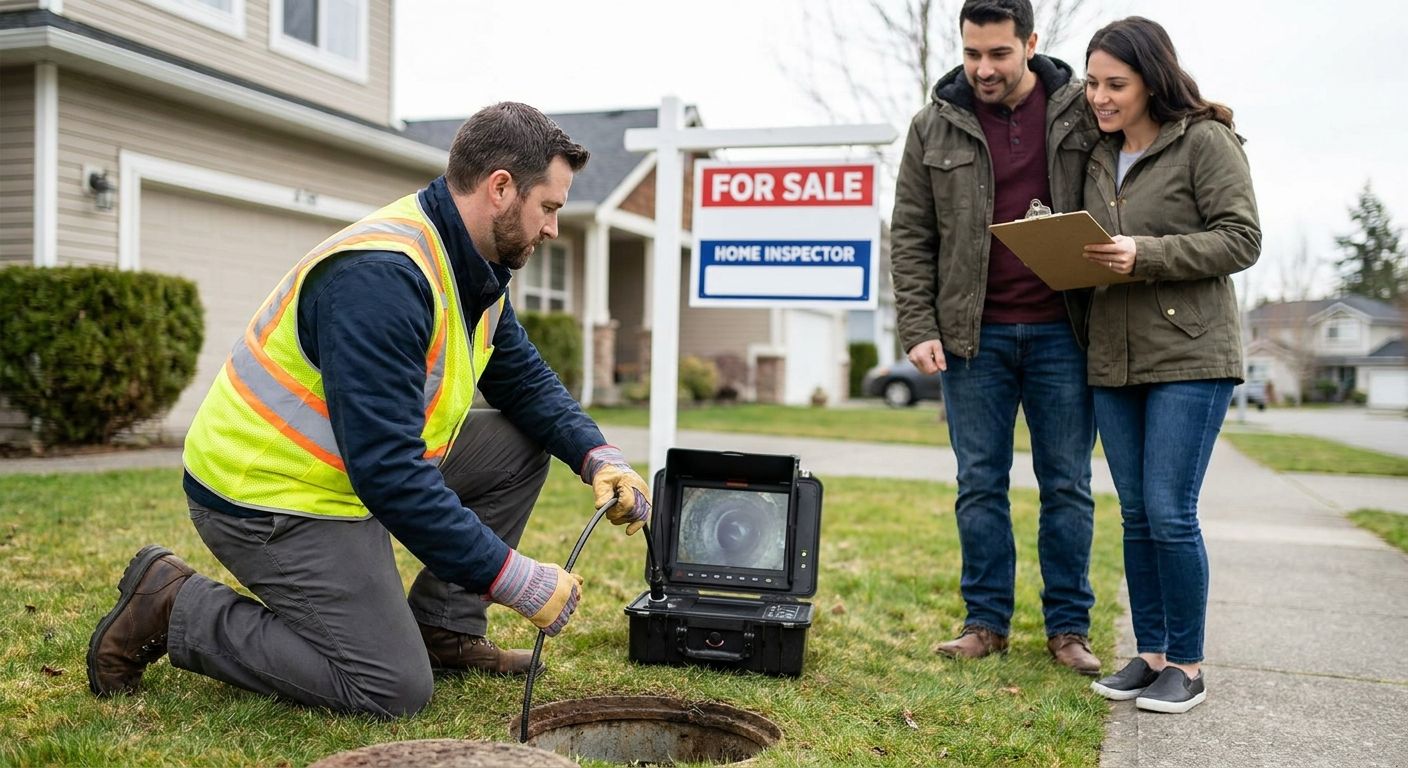
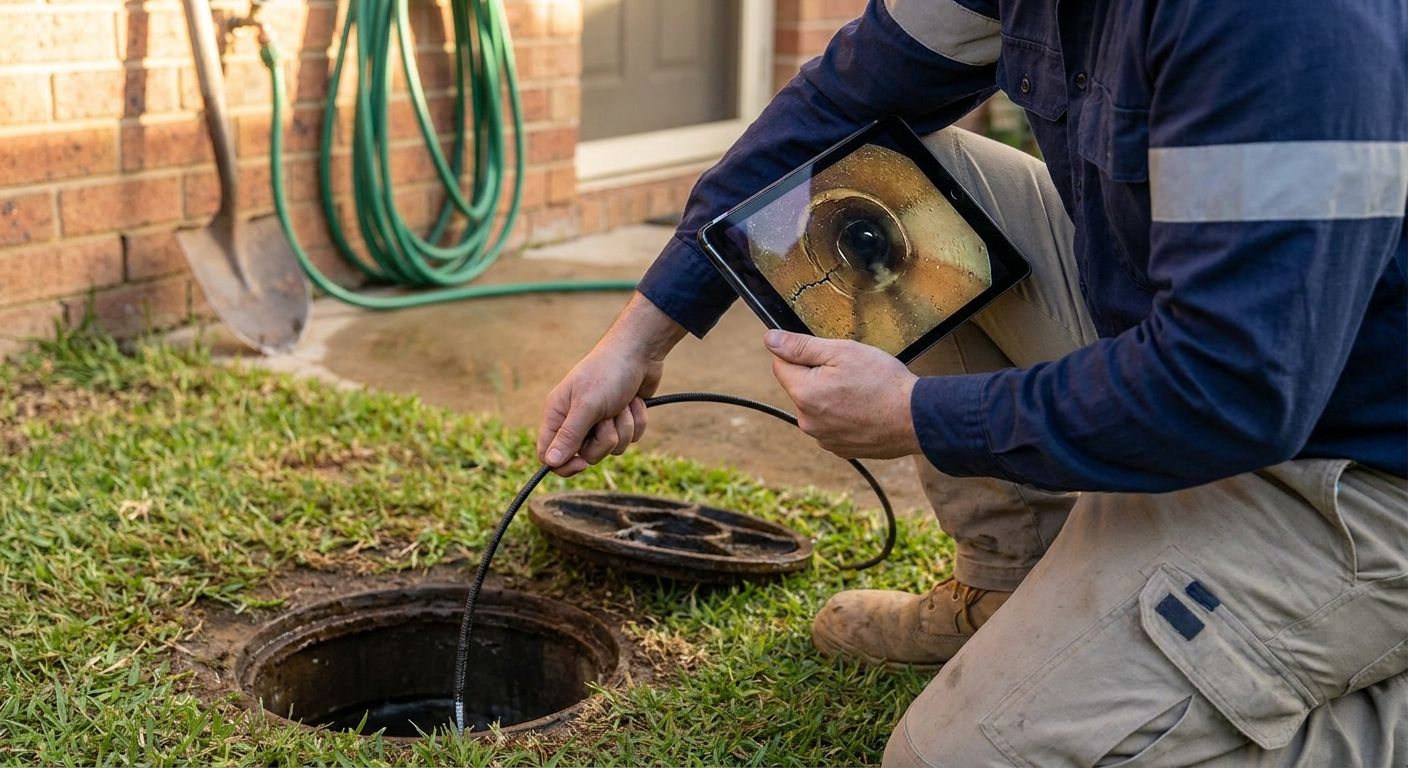
Homes built before the 1970s in Sacramento are the highest-risk group because clay and Orangeburg sewer lines were standard until PVC took over. A sewer camera inspection is the only way to tell whether you're looking at a single damaged joint or a line that's bellied and collapsing along its length — and that answer decides everything about the repair method. If your home falls into that older-construction category, the ground-level detail in sewer line repair for older Sacramento homes covers pipe-age red flags worth checking before you call anyone.
Who this is for
This guide is for homeowners who've already had a backup, a slow drain, or a camera inspection that flagged root intrusion, and now need to choose between trenchless replacement, spot repair, or a full dig. It's built around older Sacramento properties with mature trees near the sewer lateral — the exact combination that produces repeat service calls if the wrong fix gets picked the first time.
What to look for in sewer line replacement for tree root damage
Pipe material and installation age
Clay, cast iron, and Orangeburg (a tar-impregnated fiber pipe used through the 1970s) are all more vulnerable to root intrusion than modern PVC because their joints and seams give roots an easy entry point. If your home was built before 1980, assume the original lateral is one of these materials until a camera inspection proves otherwise.
Extent and location of root intrusion
A single root ball at one joint is a different job than roots infiltrating the line every 10 to 15 feet. The camera inspection report should map exactly where the damage sits and how many sections are affected — that map is what determines whether spot repair or full replacement makes financial sense.
Trenchless feasibility for your yard
Pipe bursting and CIPP lining both work through small access pits instead of a full trench, which matters if the sewer line runs under a driveway, mature landscaping, or a finished patio. Not every layout qualifies — sharp bends, severely collapsed sections, or offset joints can rule out trenchless methods and push the job back to open-trench excavation.
Root barrier and prevention plan
Replacing the pipe without addressing the tree that caused the problem just resets the clock. A root barrier installed between the tree and the new line, or root pruning on the tree side, protects the investment you're about to make.
Permit and inspection requirements
Sacramento County and the City of Sacramento both require permits for sewer lateral replacement, and the work typically needs a final inspection before the trench or access pit gets backfilled. Confirm your contractor is pulling the permit — unpermitted sewer work can complicate a home sale later.
Verification after the work
A post-repair camera inspection isn't optional. It's the only way to confirm the new line or liner is fully seated, free of debris, and sealed at every joint before the crew leaves.
Top picks: replacement methods for root-damaged sewer lines
CIPP pipe lining — the low-disruption pick. A resin-saturated liner is pulled or inverted into the existing pipe and cured in place, creating a new pipe within the old one. CIPP liners are commonly rated for a service life of roughly 50 years and require only small access points rather than a full trench. It works best when the host pipe still holds its round shape and hasn't collapsed. Verdict: Buy for root-damaged lines that are cracked or infiltrated but structurally intact.
Pipe bursting — the full replacement pick. A bursting head fractures the old pipe outward while simultaneously pulling a new HDPE pipe into its place, replacing the entire line without opening a trench along its length. This is the right call when root damage is extensive across multiple sections or when the old pipe has an undersized diameter you want to upgrade. More detail on how this compares to lining and open-trench work is in best trenchless sewer repair methods for homeowners. Verdict: Buy for severe, multi-section root intrusion where trenchless access is feasible.
Spot repair — the budget pick, with a limit. A localized dig-and-replace at a single failure point costs less and disturbs less yard than a full replacement. It only makes sense when the camera inspection confirms one isolated point of root intrusion and the rest of the line is sound. Verdict: Consider for single-point damage; Skip if the report shows root activity at multiple joints.
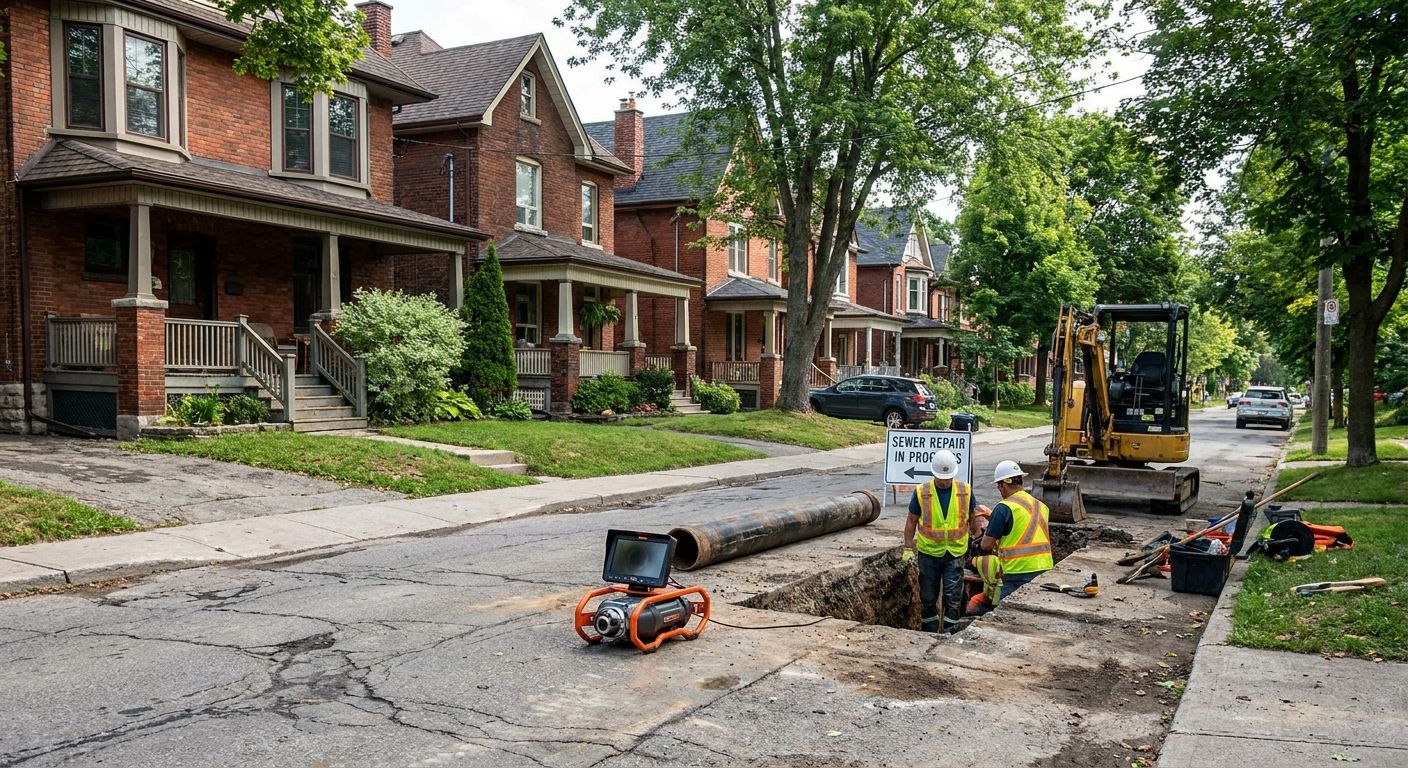
Open-trench excavation — the last-resort pick. Full excavation is the most disruptive and most expensive option in terms of landscaping and hardscape restoration, but it's sometimes unavoidable when the line has collapsed, shifted, or sits at a grade that trenchless equipment can't handle. Verdict: Consider only when trenchless methods are ruled out by an inspection.
Root barrier installation — the preventive add-on. A physical barrier set between the tree root zone and the new sewer line redirects root growth away from the pipe. It's not a standalone fix for existing damage, but it protects new pipe or lining from repeat intrusion. Verdict: Buy as an add-on to any of the above, never as a substitute.
Get a sewer camera inspection scheduled
Confirm root damage extent before choosing a repair method.
What to avoid
- Chemical root killers as a permanent fix. Foaming root killer clears growth temporarily but does nothing for the cracked joint that let roots in — it delays the next backup, it doesn't prevent it.
- Repeated mechanical snaking without a camera inspection. Cutting roots every few months without ever seeing the pipe's actual condition means you're treating a symptom while the joint keeps deteriorating underneath.
- Spot repair on a line with multiple damaged sections. It looks like the cheaper fix upfront, but patching one section while three others are compromised means you're back in the yard again within a year or two.
Verdict comparison
| Method | Yard disruption | Best for | Typical lifespan | Verdict |
|---|---|---|---|---|
| CIPP pipe lining | Low (small access pits) | Cracked but round pipe | ~50 years | Buy |
| Pipe bursting | Low-moderate (access pits) | Severe, multi-section damage | Comparable to new PVC | Buy |
| Spot repair | Low (single dig) | One isolated failure point | Matches surrounding pipe | Consider |
| Open-trench replacement | High (full trench) | Collapsed or misaligned lines | New pipe lifespan | Consider |
| Root barrier | Minimal | Prevention after repair | Ongoing if maintained | Buy (add-on) |
FAQ
What's the best sewer line replacement method for tree root damage?
Trenchless pipe bursting or CIPP lining are the best options for most root-damaged sewer lines in 2026 because they avoid a full trench. Pipe bursting suits severe, multi-section damage; CIPP lining suits pipe that's cracked but still round.
Is pipe bursting better than pipe lining for root damage?
Pipe bursting replaces the entire pipe and is better for severely damaged or undersized lines, while lining is faster and less invasive for pipe that's still structurally sound. The camera inspection results decide which one applies to your line.
How do I know if tree roots have damaged my sewer line?
Slow drains across multiple fixtures, gurgling toilets, and recurring backups near the same cleanout are the common signs. A camera inspection is the only way to confirm root intrusion versus another blockage cause.
Can I just cut the roots instead of replacing the sewer line?
Cutting roots with a mechanical auger clears the immediate blockage but doesn't seal the cracked joint the roots grew through, so regrowth is common. It works as a short-term stopgap, not a permanent fix.
How long does trenchless sewer line replacement take?
Most residential trenchless jobs finish within a single day to two days depending on line length and access, since crews aren't digging a continuous trench. Open-trench replacement generally takes longer due to excavation and yard restoration.
Will removing the tree stop root intrusion?
Removing the tree stops new root growth toward the pipe but doesn't repair existing damage or remove roots already inside the line. Existing root barriers or cracked joints still need to be addressed separately.
Is sewer line replacement covered by homeowners insurance?
Standard homeowners policies typically exclude gradual damage like root intrusion, since it's considered a maintenance issue rather than a sudden event. Check your specific policy language, since some carriers offer optional sewer line endorsements.
How much does sewer line replacement cost with tree root damage?
Cost depends on pipe length, depth, access, and whether trenchless or open-trench methods apply, so figures vary by property. A camera inspection and on-site quote is the only way to get an accurate number for your yard.
One last thing
The detail most homeowners miss: a root barrier installed after a sewer line replacement only works if it's placed between the tree's active root zone and the new pipe, not just somewhere along the trench line. Skip that placement step and the same tree can compromise a brand-new line within a few years — ask specifically where the barrier is going before the crew backfills.