Older Sacramento neighborhoods still run sewer lines laid in the 1940s through the 1970s, and most of that clay, cast iron, or Orangeburg pipe is now past its rated service life. This guide ranks the sewer repair methods that actually work on aging residential lines in 2026, with real cost ranges and a clear verdict on each.
- Trenchless pipe lining (CIPP) is the best sewer repair option for older homes with intact pipe alignment — Buy.
- Pipe bursting wins when the old line is collapsed or badly offset but the yard can't be dug up — Buy.
- Open-trench replacement is still the right call for homes with severe bellies, root intrusion clusters, or Orangeburg pipe past failure — Consider.
- Spot repair only makes sense for a single isolated crack on an otherwise sound line — Consider.
- Skip cheap hydro jetting as a stand-alone fix on a 1950s clay line — it's maintenance, not sewer repair.
Why this matters
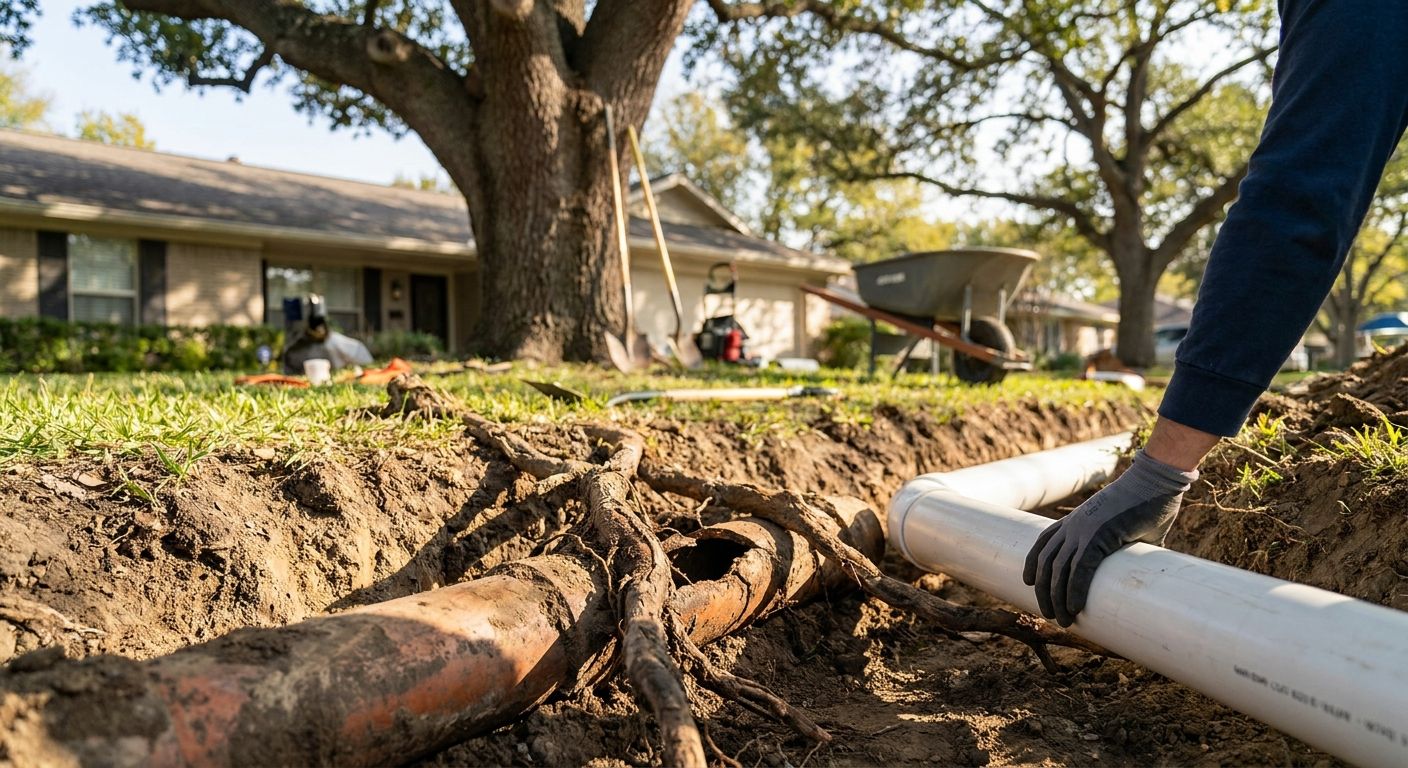
A sewer line installed before 1970 is running on borrowed time no matter how clean the drains look today. Clay pipe cracks at the joints as tree roots find moisture, cast iron corrodes from the inside out, and Orangeburg pipe — a tar-paper composite common in postwar tract housing — starts to delaminate and collapse well before the 50-year mark.
The method you choose determines whether a repair costs a few thousand dollars or turns into a torn-up front yard for a week. Getting this decision wrong on an older Sacramento home usually means paying for a spot fix in 2026 and a full sewer line repair again in 2029.
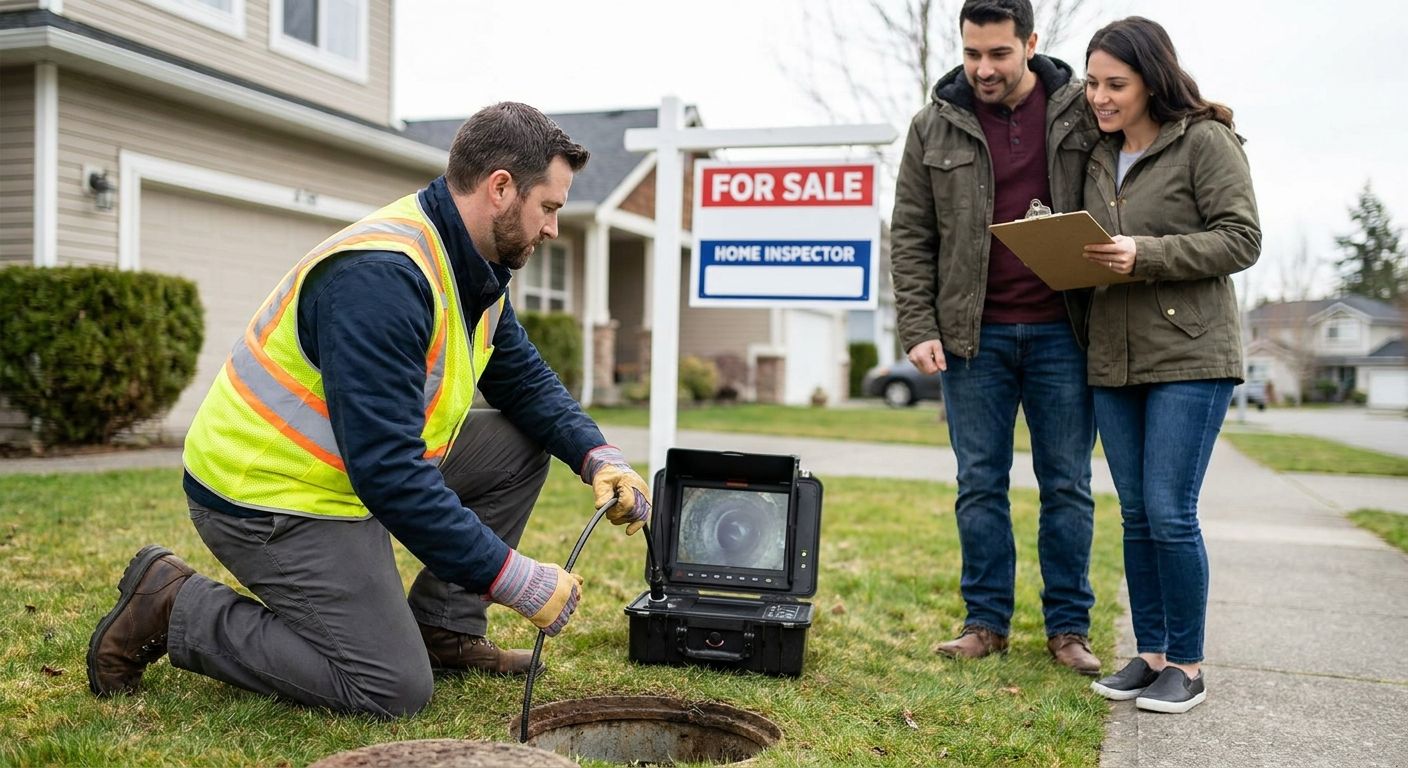
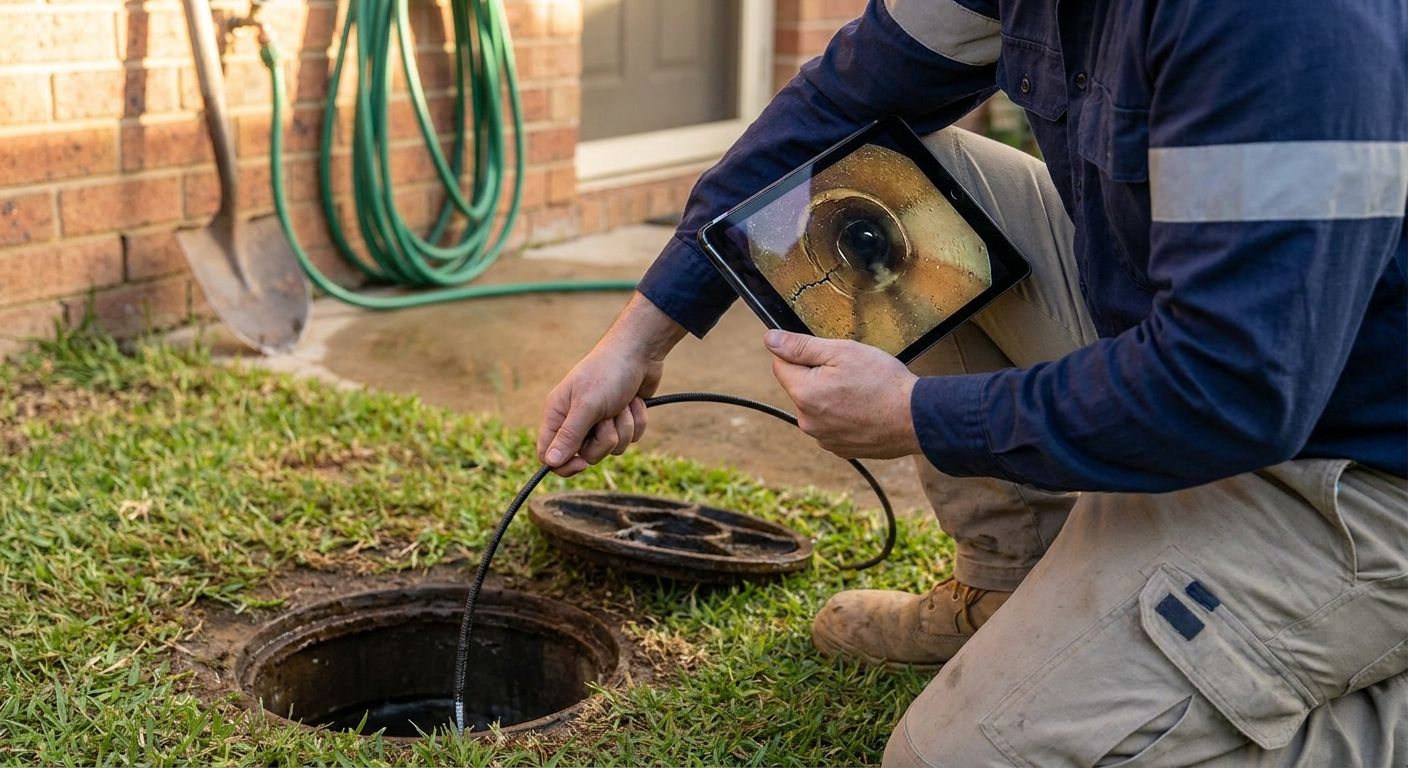
A camera inspection before any repair decision is non-negotiable. It tells you whether you're dealing with one bad joint or a pipe material that's failing end to end — and that single fact changes which option on this list is the right one.
How we ranked
Each method below is scored against four factors that matter most for pre-1970 residential lines: cost per linear foot, disruption to the property, expected service life of the fix, and suitability for the pipe materials common in older Sacramento construction — clay, cast iron, and Orangeburg. Cost ranges reflect nationally published contractor pricing for 2026; actual bids vary with pipe depth, access, and permit requirements in your specific neighborhood. A method that scores well on cost but fails on longevity for degraded pipe gets marked down, because a cheap fix that fails in three years isn't cheap.
The ranked sewer repair options for older homes
1. Trenchless pipe lining (CIPP) — the workhorse pick
Cured-in-place pipe lining inserts a resin-saturated liner into the existing sewer line and cures it into a new pipe-within-a-pipe, typically in a single day with minimal digging. It runs $80 to $250 per linear foot depending on diameter and access points, and a properly installed liner carries a rated lifespan of 50 years. For older homes with clay or cast iron pipe that's cracked but still roughly round and aligned, this is the closest thing to a full sewer line repair without excavating the yard. Full details on the process are in this breakdown of trenchless sewer repair methods. Verdict: Buy for most pre-1970 homes with intact pipe geometry.
2. Pipe bursting — the collapsed-pipe fix
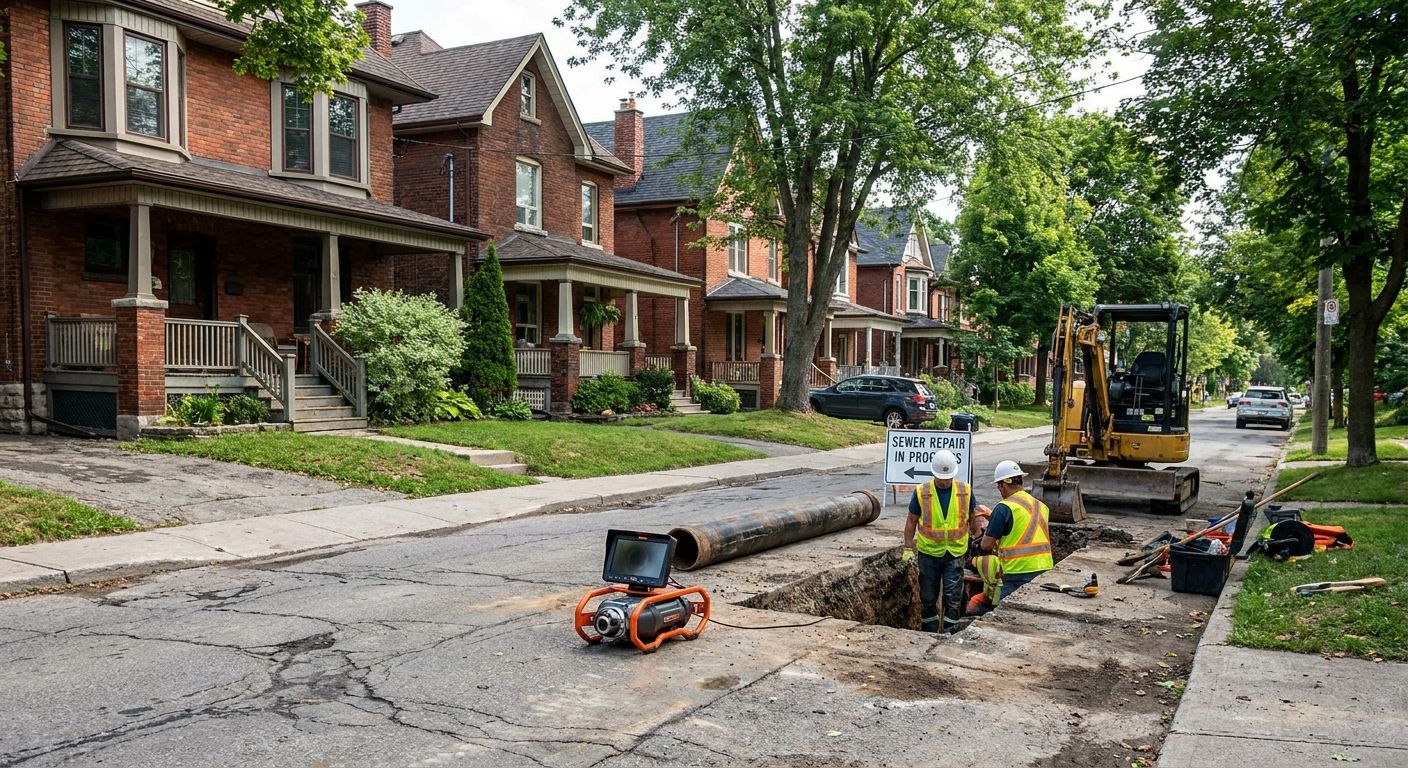
Pipe bursting pulls a new HDPE pipe through the old line while a bursting head fractures the original pipe outward into the surrounding soil. It handles collapsed sections and minor offsets that CIPP lining can't, running $60 to $200 per linear foot with one or two small access pits instead of a full trench. This is the better trenchless option when a camera inspection shows the old clay or Orangeburg pipe has actually caved in rather than just cracked. Verdict: Buy when the line is too damaged for lining but the yard, driveway, or foundation blocks open excavation.
3. Open-trench replacement — the last-resort certainty
Digging up the yard and replacing the line with new PVC is still the most reliable fix when the old sewer line has multiple failure points, severe bellies (low spots where the pipe has sunk), or root intrusion at nearly every joint. Costs run $50 to $250 per linear foot depending on depth and what's above the line — landscaping, a driveway, or a slab foundation all push the price up. It's disruptive and slow, often taking three to five days including inspection and backfill, but it resets the clock completely on a line that's failing everywhere at once. Verdict: Consider for homes with widespread damage; Skip it if a camera inspection shows the damage is localized, because trenchless options solve the same problem for less digging.
4. Spot repair — the single-crack fix
Spot repair excavates a small section — often just 3 to 6 feet — to fix one isolated break or joint separation, then leaves the rest of the line alone. It's the cheapest option per job, generally $1,000 to $4,000 depending on depth and location, but it only makes sense when a camera inspection confirms the rest of the pipe is sound. Applying spot repair to a 1960s clay line with problems every 15 feet just delays the real sewer line repair and adds cost. Verdict: Consider for a single confirmed defect on an otherwise healthy line; Skip it as a general strategy for pipe over 60 years old.
5. Hydro jetting with camera inspection — the diagnostic step, not the fix
Hydro jetting blasts the inside of the pipe clean with high-pressure water, clearing roots, grease, and scale so a camera can actually see the pipe wall condition. It costs roughly $300 to $600 as a stand-alone service and does nothing to repair a cracked or collapsed pipe — it just clears the view and buys time on a line that's still degrading. Every homeowner in an older Sacramento neighborhood should get this done before signing off on any repair method above. Verdict: Buy as a diagnostic and maintenance step; Skip it if sold as a substitute for actual sewer repair.
6. Full repipe (interior plus lateral replacement) — the whole-house reset
When the sewer lateral failure is one symptom of a home's aging plumbing system as a whole — old galvanized supply lines, a water heater near the end of its life, corroded fixtures — a full repipe addresses the sewer line alongside the rest of the system in one project. It's the most expensive path up front, but it avoids the pattern of fixing one failing system every couple of years. Homeowners weighing this route often start with a sewer line repair for older Sacramento homes assessment to see how the sewer scope fits into a larger plumbing plan. Verdict: Consider for homes past 60 years old with multiple aging systems; Skip if the sewer line is the only failing component.
Get a sewer line inspection scheduled
Camera inspection tells you which repair method fits your pipe.
Comparison table
| Method | Best For | Cost Range | Disruption | Verdict |
|---|---|---|---|---|
| Trenchless lining (CIPP) | Cracked pipe, intact alignment | $80-$250/ft | Low, 1 day | Buy |
| Pipe bursting | Collapsed or offset pipe | $60-$200/ft | Low-medium | Buy |
| Open-trench replacement | Widespread damage, bellies | $50-$250/ft | High, 3-5 days | Consider |
| Spot repair | Single confirmed defect | $1,000-$4,000 | Low, localized | Consider |
| Hydro jetting | Diagnostic and maintenance | $300-$600 | Minimal | Buy (as diagnostic) |
| Full repipe | Multiple aging systems | Varies by scope | High | Consider |
How to find the right sewer contractor
- Insist on a camera inspection before any quote. A bid without video evidence of the pipe condition is a guess, not a diagnosis.
- Ask for pricing per linear foot, not a flat number. Older lines vary in length and depth even within the same block, and a per-foot quote is easier to compare across contractors.
- Confirm the contractor pulls a permit for trenchless work. Sacramento requires permits for sewer lateral repair regardless of method, and skipping this step creates problems at resale.
FAQ
What is the best sewer repair option for older homes in 2026?
Trenchless pipe lining (CIPP) is the best sewer repair option for most older homes with cracked but structurally aligned pipe, costing $80 to $250 per linear foot with minimal digging. Homes with collapsed sections need pipe bursting instead.
Is trenchless sewer repair better than digging up the yard?
Trenchless repair is better than open-trench digging when the pipe alignment is intact, since it avoids destroying landscaping and finishes in about a day. Open-trench replacement is still necessary when damage is widespread across the line.
How much does sewer line repair cost for an older home?
Sewer line repair for older homes ranges from $1,000 for a single spot repair to $250 per linear foot for full trenchless or open-trench replacement. The total depends on pipe length, depth, and how many failure points a camera inspection finds.
How long does clay sewer pipe last?
Clay sewer pipe typically lasts 50 to 60 years before joint separation and root intrusion cause failure. Homes built before the mid-1970s in older Sacramento neighborhoods are commonly at or past this age in 2026.
Does homeowners insurance cover sewer line replacement?
Most standard homeowners policies exclude sewer line failure from normal wear and age, which is the most common cause in older homes. Coverage is more likely only if a separate sewer line endorsement was added to the policy.
How do I know if my sewer line needs full replacement vs. a spot repair?
A camera inspection is the only reliable way to tell, and it should show whether damage is isolated to one section or scattered across the whole line. Multiple failure points on a pipe over 50 years old usually points to full replacement rather than a spot fix.
Is pipe bursting safe for pipes near a foundation?
Pipe bursting works safely near foundations in most cases because it displaces old pipe material into the surrounding soil rather than requiring a wide trench. A contractor should still confirm clearance distances before starting on lines running close to a slab.
One last thing
Orangeburg pipe — the tar-paper composite used heavily in Sacramento tract housing built between the 1940s and 1960s — often looks fine on a camera right up until it deforms into an oval and collapses within months. If your home falls in that build window and you've never had a camera inspection, treat that as the first move in 2026, not the repair itself.