Sewer line repair for older Sacramento homes means dealing with pipe materials that predate modern plumbing codes — clay, cast iron, and Orangeburg — each with its own failure pattern and repair path. This guide breaks down what to check before you sign a repair estimate and which repair method fits which kind of damage.
- Trenchless pipe lining is the buy for older Sacramento homes with intact but deteriorating clay or Orangeburg pipe in 2026.
- Pipe bursting beats open-trench replacement when the sewer lateral has fully collapsed or sagged.
- Skip chemical root treatments as a standalone fix on cracked clay pipe — they clear roots for months, not years.
- Sacramento neighborhoods like Land Park, Curtis Park, and East Sacramento still run heavy on lines installed before 1972.
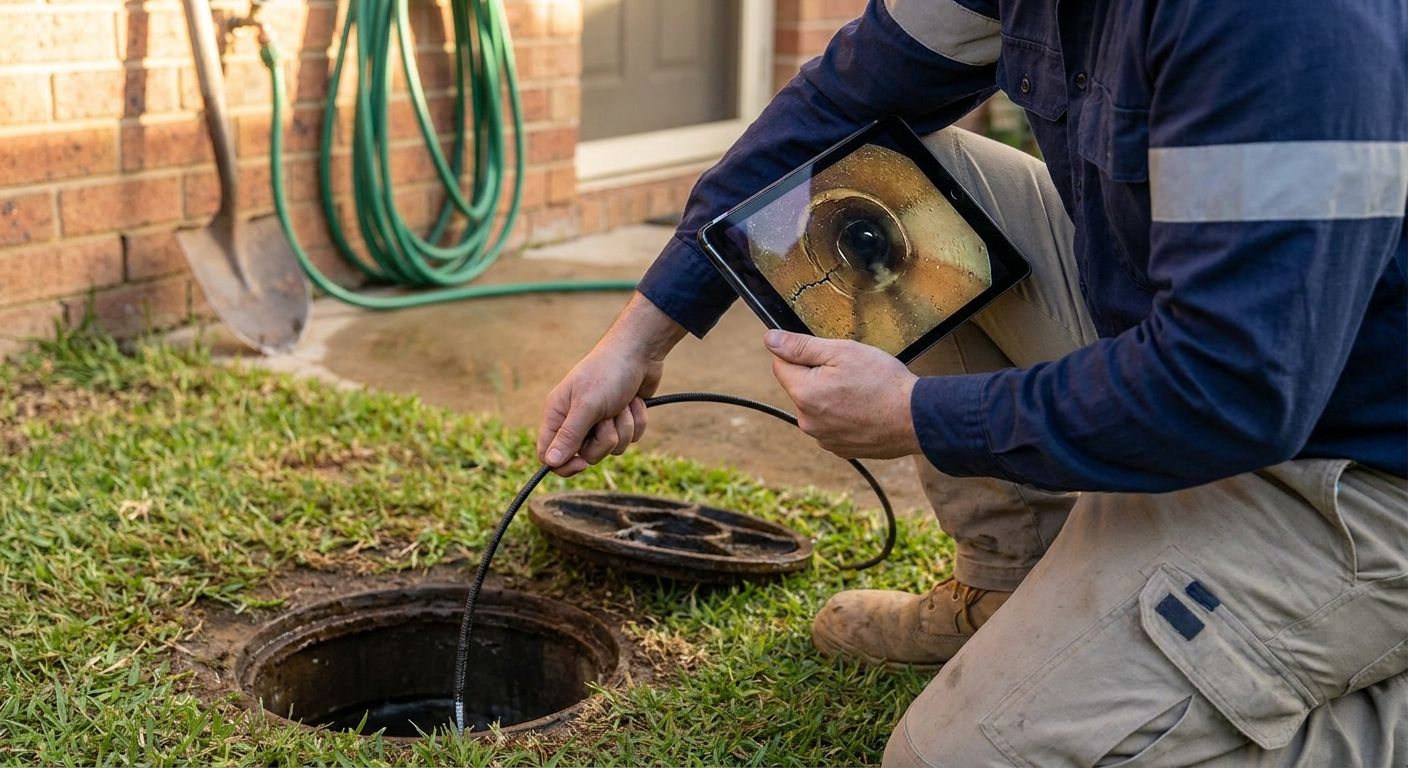
- A camera inspection before any sewer line repair sacramento quote is the only way to confirm pipe material and the actual failure point.
Why this matters
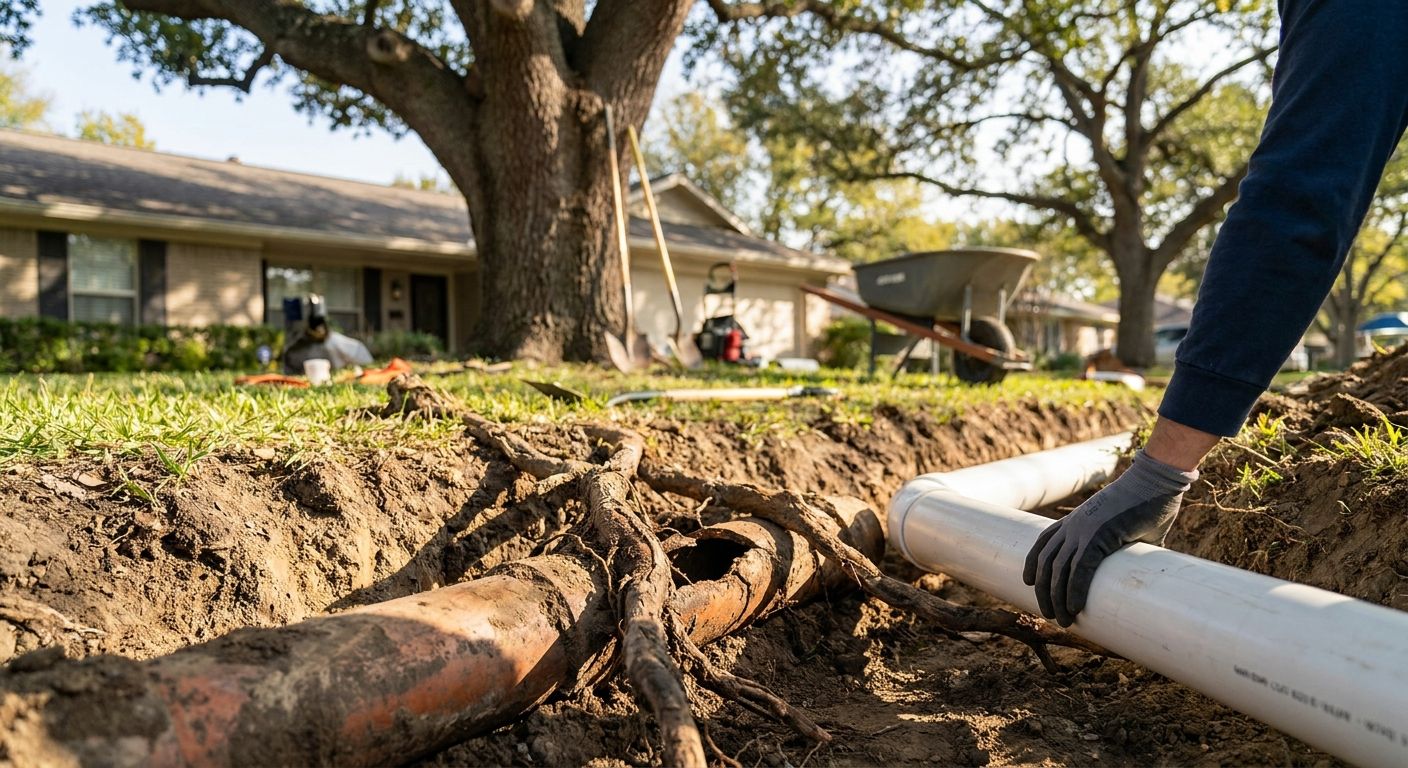
Homes built in Sacramento's older neighborhoods — Land Park, Curtis Park, East Sacramento, Oak Park, and Tahoe Park among them — were largely constructed between the 1920s and the 1960s, which puts their original sewer laterals squarely inside the failure window in 2026. Clay pipe from that era typically runs 50 to 60 years before joints separate and roots find their way in. Orangeburg pipe, made from wood pulp and pitch and installed heavily between 1945 and 1972 during metal shortages, ovals and flattens under soil pressure long before it visibly collapses. Cast iron holds up longer, often 75 to 100 years, but corrodes from the inside and eventually shows the same symptoms: slow drains, gurgling, and backups after heavy rain.
If your home falls in that build window, the question isn't whether the sewer lateral needs attention — it's which repair method matches the damage. Getting that wrong means paying for a fix that doesn't hold, or paying for full excavation when a smaller job would have worked. A quick call to Flores Precision Plumbing for a camera inspection settles the pipe-material question before any repair conversation starts.
Who this is for
This guide is for owners of Sacramento homes built before 1980, especially in the older core neighborhoods, who are seeing recurring slow drains, sewage odor in the yard, or a backup that keeps coming back after snaking. If your home still has its original clay or Orangeburg lateral and you're staring down a repair estimate in 2026, the sections below tell you what separates a fix that lasts from one that doesn't.
What to look for in sewer line repair for older Sacramento homes
Camera inspection before any quote
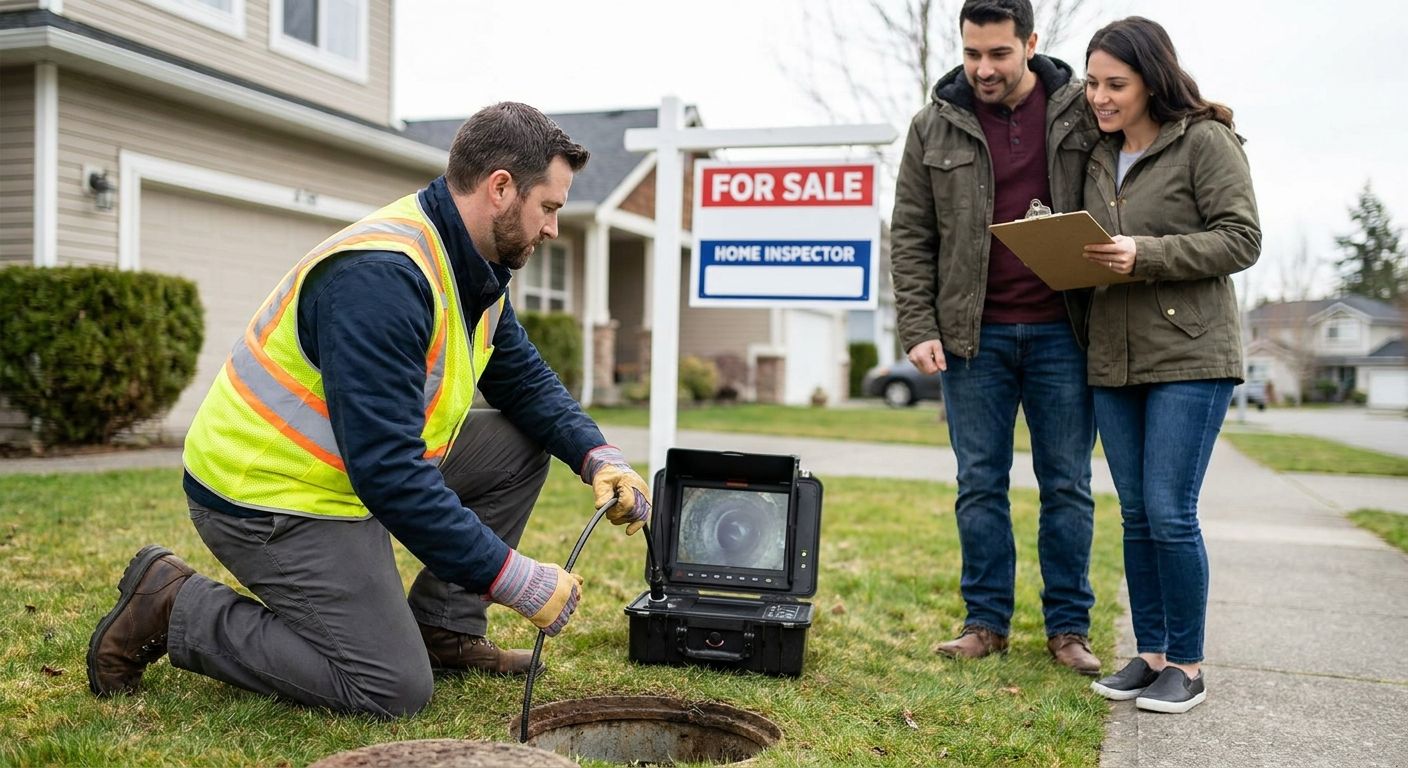
No repair method should get proposed without a camera run through the line first. A camera inspection identifies pipe material, locates the exact failure point, and shows whether the damage is a single crack or full-length deterioration — information that changes which repair method actually applies.
Trenchless capability
Older Sacramento lots often have mature landscaping, driveways, or additions sitting directly over the original sewer path, which makes open-trench digging expensive and disruptive. A contractor who can run trenchless pipe lining or pipe bursting gives you a repair option that doesn't require tearing out a 40-year-old tree or a poured patio.
Root intrusion history
Clay and Orangeburg pipe joints are exactly where roots enter, and a line with repeated root-clearing service calls is telling you the joints are already separated. Ask how many times the line has been snaked in the past two years — three or more clearings on the same section points to a structural problem, not a maintenance one.
Sacramento permit and lateral compliance
The City of Sacramento requires permits for sewer lateral work, and older homes sometimes have laterals that predate current code on cleanout placement and pipe slope. A repair that skips the permit step can leave you without documentation if the line fails again or if you sell the house.
Cleanout access
Many homes built before the 1960s were never fitted with an exterior cleanout, which means every inspection or clearing call starts with locating an access point through a toilet or roof vent. Adding a cleanout during the repair — rather than treating it as a separate job — saves a second dig and a second bill down the line.
Scope and warranty clarity
Get the repair scope in writing: full length of pipe replaced or lined versus a spot repair, and what section is actually covered. Vague scope language is the single most common reason homeowners end up paying twice for the same stretch of pipe within a few years.
Get a sewer camera inspection scheduled
Confirm pipe material and failure point before choosing a repair method.
Top picks: sewer line repair methods for older Sacramento homes
Trenchless pipe lining — the low-disruption pick. A resin liner cures inside the existing pipe, creating a new pipe within the old one without digging up the yard. It works when the line is structurally sound enough to hold a liner but has cracks, root intrusion, or minor offset joints. For clay or cast iron pipe with localized deterioration, this is usually the Buy.
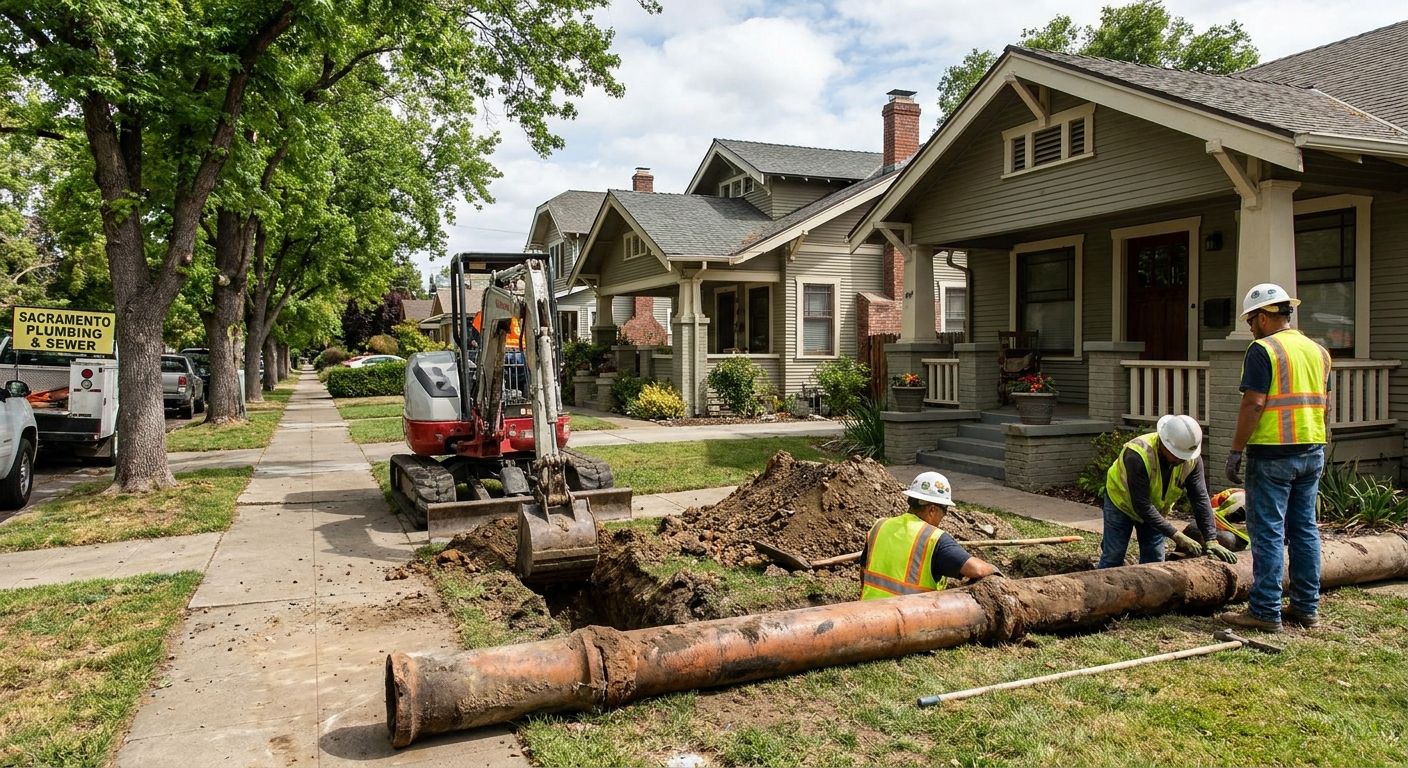
Pipe bursting — the full-replacement pick. A new pipe gets pulled through the path of the old one while a bursting head fractures and pushes out the original pipe, so you get a full-diameter replacement without an open trench end to end. This is the call when Orangeburg pipe has flattened past the tolerance a liner needs, or when the line has bellied (sagged) and needs a corrected slope. Consider it whenever a camera inspection shows full-length deformation rather than isolated cracking.
Spot repair — the budget-conscious pick. When the camera shows one clear break point on an otherwise sound line, a localized dig-and-replace at that single spot costs less disruption than relining or bursting the whole run. This only works if the rest of the pipe checks out clean on camera. Consider for single-point failures; Skip if the inspection shows deterioration anywhere else along the run, since you'll be back for a second repair.
Traditional open-trench replacement — the last-resort pick. Full excavation replaces the entire lateral and is still the right call when trenchless access is blocked by tree roots too large to burst through, extreme depth, or a lateral that needs rerouting entirely. It's more disruptive to landscaping and hardscape, but it's also the most direct way to fix a line with multiple failure points. Buy only when a contractor has ruled out trenchless options first — otherwise Skip in favor of lining or bursting.
Hydro-jetting alone — the maintenance-only option. High-pressure water clears roots, grease, and debris from the pipe interior, and it's genuinely useful as ongoing maintenance on a structurally sound line. It does nothing for a cracked or collapsed pipe. Skip it as a substitute for actual repair once a camera inspection confirms structural damage.
What to avoid
- Chemical root killer as a standalone fix. It clears root growth inside the pipe for a few months on a line that's already cracked, but it does nothing for the joint separation letting roots in — the backup returns.
- A quote with no camera inspection attached. Any estimate for sewer line repair sacramento that skips the camera step is guessing at pipe material and failure location, which means guessing at the price too.
- DIY snake rental as a recurring fix. Renting a snake every few months for the same backup on a pre-1970s clay or Orangeburg line usually means the pipe itself is failing, not the drain.
Verdict comparison
| Method | Disruption to yard | Best for | Verdict |
|---|---|---|---|
| Trenchless lining | Low | Cracked or root-damaged clay/cast iron with sound structure | Buy |
| Pipe bursting | Low to moderate | Flattened Orangeburg or bellied lines | Consider |
| Spot repair | Low | Single confirmed break point | Consider |
| Open-trench replacement | High | Multiple failure points, blocked trenchless access | Buy (when trenchless fails) |
| Hydro-jetting alone | None | Maintenance on structurally sound lines | Skip (as repair) |
FAQ
What's the best sewer line repair method for an older Sacramento home?
Trenchless pipe lining is usually the best fit for older Sacramento homes with clay or cast iron pipe showing cracks or root intrusion but no full collapse. Pipe bursting works better when the line has flattened or bellied beyond what a liner can fix.
How do I know if my sewer line has Orangeburg pipe?
A camera inspection is the only reliable way to confirm Orangeburg pipe, which was installed heavily in homes built between 1945 and 1972. It shows as a dark, fibrous material that often appears ovaled or flattened rather than round.
Is trenchless sewer repair better than digging up the yard?
Trenchless repair is better when the existing pipe is structurally sound enough to line or burst, since it avoids tearing out landscaping, driveways, or additions built over the original lateral. Open-trench replacement is still necessary when the line has multiple failure points or blocked access.
How much does sewer line repair cost in Sacramento?
Cost depends on pipe length, depth, material, and whether the job is trenchless or open-trench, so get a camera inspection and written scope before comparing quotes. Ask what section of pipe each estimate actually covers.
Does the City of Sacramento require a permit for sewer lateral repair?
Yes, sewer lateral work in Sacramento requires a permit, and older homes sometimes have laterals that predate current code on slope and cleanout placement. Confirm your contractor is pulling the permit before work starts.
Can tree roots really break a sewer pipe?
Roots don't break sound pipe on their own — they grow into existing joint gaps and cracks in clay or Orangeburg lines, then widen the damage over time. Repeated root clearing on the same section usually signals a structural problem, not just a maintenance one.
How long does clay sewer pipe last?
Clay sewer pipe typically lasts 50 to 60 years before joints separate and root intrusion becomes a recurring issue. Homes built in Sacramento's older neighborhoods before the 1970s are often at or past that window in 2026.
What's the difference between pipe lining and pipe bursting?
Pipe lining installs a resin liner inside the existing pipe without removing it, which works when the pipe is still structurally sound. Pipe bursting fractures and removes the old pipe while pulling a new one through the same path, which works when the old pipe is too deformed to line.
One last thing
Orangeburg pipe doesn't fail the way most homeowners expect — it doesn't crack first, it ovals. The round pipe slowly flattens under soil pressure until it's closer to an oval than a circle, and by the time a backup shows up, the pipe may already be at 40-50% of its original diameter. A camera inspection catches that shape change well before a full collapse forces an emergency dig, which is the difference between a planned repair and a weekend emergency call in 2026.