Skip the salt check for a few months and a water softener quietly stops softening—Sacramento's hard water scales up faucets, water heaters, and fixtures fast once the resin bed gets neglected. This guide walks through the exact water softener maintenance schedule that keeps a system running its full 10-15 year lifespan in 2026.
- Check salt levels every 3-4 weeks; low salt is the leading cause of softener failure in 2026.
- Clean the brine tank twice a year to prevent salt bridging and mushing before they clog the system.
- A resin bed lasts 10-15 years, but iron-heavy water shortens that window without annual resin cleaner treatments.
- Full water softener maintenance takes under 30 minutes a month once you know the four checkpoints below.
Why this matters
A neglected water softener doesn't fail overnight—it fades. Hardness creeps back into the water gradually, so most homeowners don't notice until soap stops lathering and white scale shows up on faucets and shower doors.
That scale doesn't stop at the tap. Hard water minerals build up inside water heaters and pipes, cutting appliance lifespan and driving up energy bills. If you're weighing options for hard water protection beyond the softener itself, Flores Precision Plumbing handles water softener installs, water heaters, and repiping across Sacramento homes.
Maintenance on a water softener is cheap and fast compared to replacing a scaled-out water heater or repiping a house full of mineral-clogged lines. Twenty to thirty minutes a month is the entire commitment.
What you'll need
- Water softener salt — pellet or evaporated block salt, never rock salt (it leaves insoluble residue in the tank)
- Flashlight — to check salt level and inspect for bridging
- Bucket and warm water — for the twice-yearly brine tank cleaning
- Shop vac — optional, speeds up salt sludge removal
- Resin cleaner — an iron-removal formula if your water source has iron staining
- 20-30 minutes — for monthly checks; budget an hour for the twice-a-year deep clean
If you're still deciding on a unit or sizing one for your home, this guide to choosing a water softener for hard water homes walks through capacity and grain-per-gallon sizing before you buy.
The steps
1. Check the salt level monthly
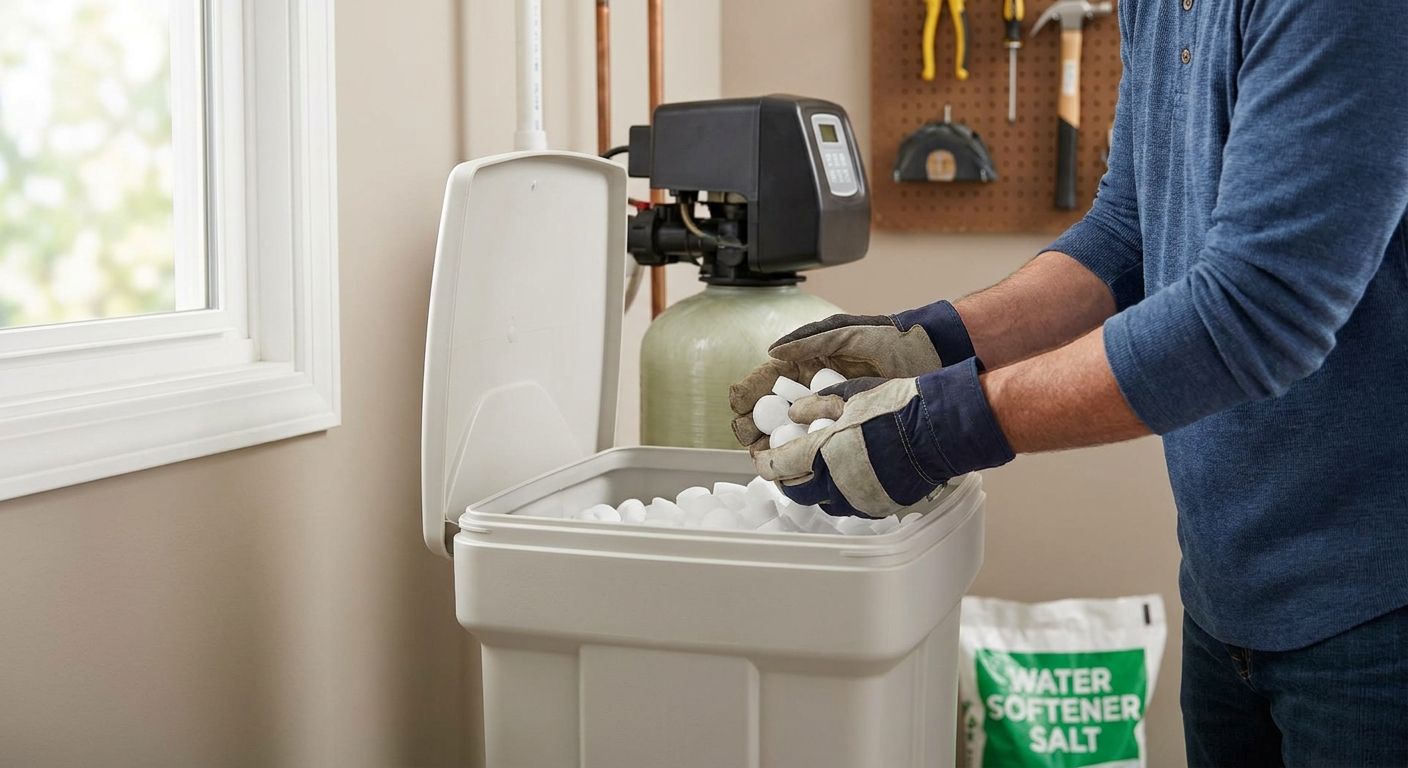
This is the single most-skipped step in water softener maintenance, and it's why most softener complaints trace back to an empty tank. Salt should sit 1-2 inches above the water level inside the brine tank at all times. Pop the lid, shine a flashlight in, and top off with pellet salt whenever the level drops below the halfway mark. Running the tank dry for even a few regeneration cycles lets hard water pass straight through untreated.
Common mistake: buying rock salt because it's cheaper. It contains impurities that build sludge at the tank bottom and clog the brine valve within a year or two.
2. Break up salt bridges and mushing
A salt bridge is a hardened crust that forms above the water line, leaving an air gap below it—the tank looks full but the softener can't draw brine from it. Salt mushing is the opposite problem: a thick sludge layer at the tank bottom. Both stop regeneration cold while looking fine from the top. Use a broom handle to gently press down through the salt every month; if it resists like concrete, you've found a bridge. Break it up carefully without cracking the tank liner.
Expected outcome: salt should feel loose and free-flowing all the way to the bottom after you break a bridge.
3. Clean the brine tank twice a year
Sediment and salt sludge accumulate at the bottom of the tank even with regular use, and by 2026 most manufacturers still recommend a full drain-and-scrub every six months. Shut off the bypass valve, drain remaining water and salt, and scrub the interior with warm water. A stiff brush handles stubborn residue; a shop vac clears the sludge faster than bailing by hand. Let the tank dry before adding fresh salt.
Common mistake: skipping this because the tank "looks clean" from the top—sludge builds invisibly at the bottom first.
4. Inspect and clean the venturi valve
The venturi (injector) creates the suction that draws brine into the resin tank during regeneration. Mineral deposits and salt sediment clog this small nozzle more than any other component. Remove the venturi assembly per your unit's manual, soak it in warm water, and clear the nozzle opening with a soft brush or toothpick—never a metal object that could widen the opening.
Why it matters: a clogged venturi is the number one reason a softener stops regenerating even when salt levels look fine.
5. Test water hardness quarterly
A simple hardness test strip (soap-based or drop-count kit) tells you whether the softener is actually doing its job. Run water straight from a tap after a regeneration cycle and compare against the strip's grains-per-gallon scale. If hardness creeps above the level your unit is rated for, something upstream—salt, resin, or valve—needs attention before scale damage starts.
6. Add resin cleaner annually
Iron and manganese in well water or municipal supply foul the resin beads over time, reducing their capacity to exchange calcium and magnesium. An annual dose of resin cleaner, run through a regular regeneration cycle, strips this fouling and restores exchange capacity. Skip this step in iron-heavy water and expect the resin bed's 10-15 year lifespan to shrink considerably.
7. Check the bypass valve and control head settings
Verify the bypass valve is fully open during normal operation—if it's partially closed, unsoftened water mixes into your supply. Confirm the control head's regeneration schedule still matches your household's actual water use; a family that's grown or shrunk since installation may need the cycle frequency adjusted.
Common mistake: leaving factory default settings in place for years after household water use has changed significantly.
8. Schedule a professional inspection annually
DIY covers the routine work, but a licensed plumber catches resin degradation, valve wear, and control head issues before they become full system failures. An annual inspection is worth the cost against the price of a full softener replacement.
Troubleshooting
- Water feels hard again after months of soft water — check for a salt bridge first; it's the most common cause and the easiest fix.
- Softener won't regenerate on schedule — inspect the control head timer and battery backup if the unit has one; a reset often solves it.
- Water tastes salty — the brine valve is likely stuck open, letting excess brine bleed into the softened water supply.
- Rust-colored water after regeneration — iron fouling on the resin bed; run resin cleaner and consider a pre-filter if this repeats.
- Softener cycles far more often than usual — resin capacity has likely dropped from age or fouling; test hardness to confirm before assuming the resin needs full replacement.
- Loud or unusual noises during regeneration — often a venturi clog or a failing motor on the control valve; this is where a professional inspection earns its keep.
Need a softener inspection?
Sacramento water softener and water heater service from Flores Precision Plumbing.
Tools and resources
- Water softener salt (pellet, not rock salt) and a hardness test kit
- Resin cleaner rated for your softener brand
- Guide to choosing a water softener for hard water homes if you're sizing a new unit
- Manufacturer's manual for venturi and control head part numbers
What to do next
Hard water doesn't just affect the softener—it scales the water heater downstream too. If your tankless unit hasn't been serviced in a while, this guide on flushing a tankless water heater covers the descaling process that protects the heat exchanger from the same mineral buildup a neglected softener lets through.
FAQ
How often should you maintain a water softener?
Check salt levels monthly and deep-clean the brine tank twice a year. A full inspection of the venturi valve and resin bed once a year catches problems before they cause a system failure.
What type of salt is best for a water softener?
Pellet or evaporated block salt works best because it dissolves cleanly. Rock salt is cheaper but leaves insoluble sediment that clogs the brine valve over time.
How long does a water softener last?
A properly maintained water softener lasts 10-15 years. Skipping salt checks and resin cleaning shortens that lifespan significantly, especially in homes with iron in the water supply.
Why is my water hard again after softening?
A salt bridge or empty brine tank is the most common cause. Break up any hardened salt crust and confirm the salt level sits 1-2 inches above the water line.
How much does water softener maintenance cost in 2026?
Routine DIY maintenance costs only the price of salt and occasional resin cleaner. Professional annual inspections add a service fee but catch valve and resin issues before they require full replacement.
Can hard water damage a water heater?
Yes. Mineral scale from hard water builds up inside tanks and heat exchangers, cutting efficiency and shortening the water heater's lifespan. A well-maintained softener prevents most of that buildup.
Is it bad to let a water softener run out of salt?
Yes. Running dry lets hard water bypass treatment entirely during regeneration cycles, and prolonged low-salt conditions can damage the resin bed's exchange capacity over time.
One last thing
The part homeowners never expect: a jammed brine valve from salt mushing causes more service calls than any motor or electronic failure in a water softener. It's a five-minute fix once you know to look for it, and it's exactly why the monthly salt check matters more than any other step on this list.