Sacramento's municipal water runs moderately to very hard depending on your neighborhood's source, and that mineral load is why fixtures crust over, water heaters fail early, and soap won't lather no matter what you buy at the store. This guide breaks down what to look for in water softener installation for Sacramento hard water homes, which system types actually earn their cost, and what to skip.
- Salt-based ion exchange softeners remain the safe pick for Sacramento hard water homes in 2026 — buy one sized to household headcount.
- Salt-free conditioners don't remove hardness minerals; treat them as a maintenance add-on, not a softener replacement.
- Dual-tank systems earn their premium only in households of 5+ people running water heavily throughout the day.
- Undersized units are the most common water softener installation mistake in Sacramento — regeneration frequency tells you fast if capacity is wrong.
Why this matters
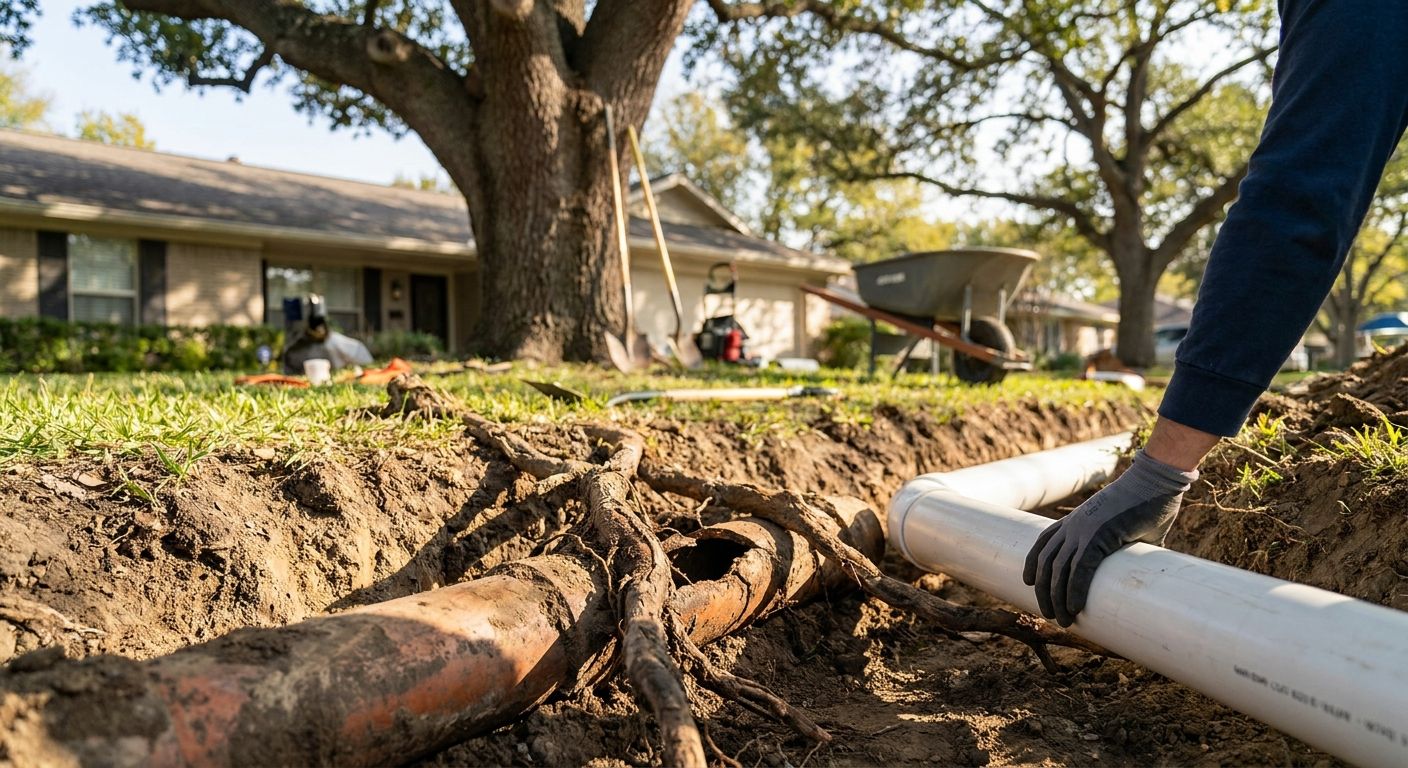
Hard water doesn't just leave spots on your glassware. It builds scale inside pipes, water heater tanks, and fixture valves, which raises your energy bill and shortens the life of everything water touches in your house. Flores Precision Plumbing sees the same pattern across Sacramento homes: water heaters failing years ahead of schedule, faucets seizing, and dishwashers running loud because scale has coated the heating element.
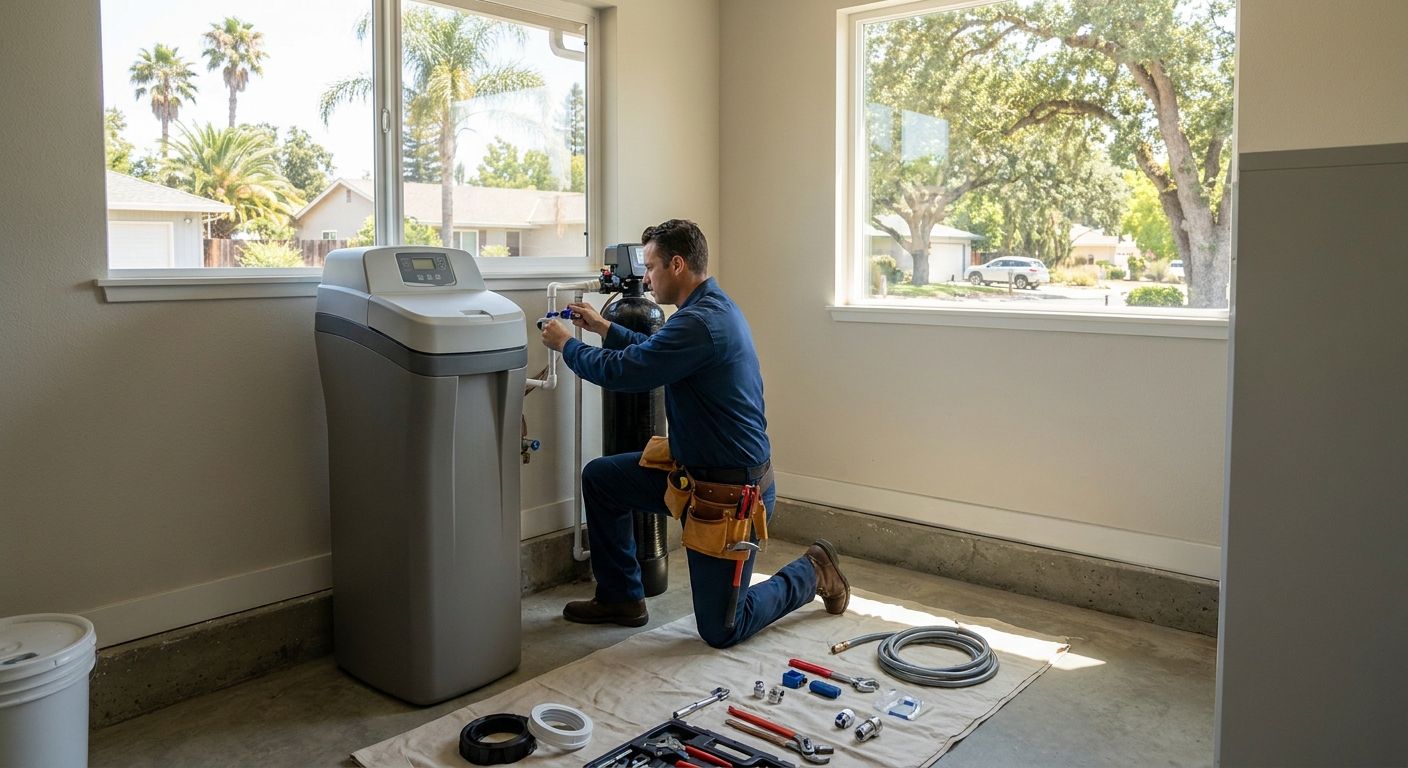
A properly sized water softener installation reverses that damage curve going forward, but the sizing and system type decision matters more than the brand name on the tank. Get either one wrong and you're either paying for capacity you don't need or replacing salt bags every two weeks.
Who this is for
This guide is built for Sacramento homeowners who've noticed white scale on faucets, film on shower doors, or a water heater that needs replacing well before its expected lifespan. It's also for anyone buying a home built before the 2000s with original galvanized or copper plumbing, where decades of mineral buildup have already narrowed pipe diameter. If your water tests above 7 grains per gallon or you're seeing scale inside 18 months of moving in, a softener install is not optional maintenance — it's damage control.
What to look for in water softener installation for Sacramento hard water homes
Grain capacity matched to household size
Undersizing is the single most common mistake in water softener installation. A 2-person household typically needs 24,000-32,000 grains of capacity, while a 4-5 person household needs 40,000-48,000 grains at Sacramento's hardness levels. Buy short and the unit regenerates every other day, burning through salt and water it shouldn't need to use.
Regeneration type — metered vs. timer-based
Metered (demand-initiated) regeneration tracks actual water usage and only regenerates when the resin bed is spent, not on a fixed clock. That difference alone can cut salt and water consumption by a meaningful margin over a timer-based unit that regenerates on a schedule whether you've used the softener heavily that week or not.
Bypass valve and pre-filter compatibility
Sacramento homes on well water or older municipal lines often carry sediment along with hardness minerals. A softener installed without a sediment pre-filter clogs the resin bed faster and voids warranty coverage on most units — confirm the install includes a pre-filter stage if your water runs cloudy or if you're on a well.
Salt storage and refill access
The brine tank needs to sit somewhere you'll actually reach to dump 40-pound salt bags every few weeks. Garage installs work for most Sacramento homes; crawlspace or tight utility closet placements make maintenance a chore people skip, and a skipped refill means the softener stops working with nobody noticing for months.
Impact on existing water heater and fixtures
If your water heater is already showing scale symptoms — banging or popping sounds, longer heat-up times, reduced hot water output — installing a softener now protects the replacement unit from day one. Check how to tell if your water heater needs replacing before committing your budget to a softener alone; sometimes both need attention in the same visit.
Warranty and resin bed quality
Resin bed quality determines whether the unit still softens effectively at year 8 or degrades by year 4. Cheaper resin fouls faster under Sacramento's mineral load, so a longer resin warranty (10 years vs. 5) is worth the price difference on a system you're planning to run for a decade or more.
Get your Sacramento water tested first
Confirm your hardness level and sizing before you buy anything.
Top picks by system type
Salt-based ion exchange softener — the safe pick
This is the standard for a reason: it physically swaps hardness minerals for sodium ions and delivers genuinely soft water, not conditioned water. A 40,000-grain unit covers most 3-4 person Sacramento households comfortably through a full week of normal use before regenerating. Verdict: Buy. This is the default recommendation unless you have a specific reason to avoid sodium in your water supply.
Salt-free conditioner — the wildcard
These units alter mineral structure so scale doesn't stick to surfaces, but they don't remove hardness minerals from the water at all. Homeowners expecting soft-water feel — the slippery skin sensation, less soap needed — will be disappointed. Verdict: Consider only as a scale-prevention add-on for homes wanting to avoid salt entirely, not as a softener replacement. Read how to choose a water softener for hard water homes before assuming a conditioner solves the same problem a softener does.
Dual-tank system — for large households
A dual-tank setup keeps one resin tank online while the other regenerates, so a household of 5 or more never runs out of soft water mid-shower. It costs more upfront and takes up roughly double the floor space of a single-tank unit. Verdict: Buy for large families running laundry, dishwashers, and multiple showers daily; Skip for households of 1-3 people where a single tank never gets stressed.
Smart metered single-tank softener — the efficient middle ground
Metered units regenerate based on gallons used rather than a fixed schedule, which typically means fewer regeneration cycles per month than timer-based systems and less salt consumed over a year. Verdict: Buy. This is the right pick for most Sacramento households in 2026 that want soft water without babysitting a timer dial.
Combo softener plus sediment filtration
Homes on well water or with older municipal lines carrying visible sediment need filtration ahead of the resin bed, not after. A combo unit protects the softener's resin from fouling and extends the life of downstream fixtures and the water heater. Verdict: Buy if your water runs cloudy or you're on a private well; Skip if you're on clean municipal supply with no sediment complaints — you're paying for filtration you don't need.
What to avoid
- Undersized "whole-house" units marketed as universal fits. A 24,000-grain unit sold as a one-size-fits-all solution will regenerate constantly in a 4-person Sacramento household and burn through salt faster than a correctly sized unit.
- Demineralization systems sold as softeners. Some reverse-osmosis-adjacent systems get marketed alongside softeners but only treat drinking water at one tap, not the whole house. They won't stop scale in your water heater or pipes.
- Skipping pre-filtration on well water. Installing a softener on sediment-heavy well water without a pre-filter shortens resin life dramatically and is a common cause of early warranty claims.
Verdict comparison
| System type | Best for | Grain capacity | Verdict |
|---|---|---|---|
| Salt-based ion exchange | Most Sacramento households | 32,000-48,000 | Buy |
| Salt-free conditioner | Scale prevention, no sodium | N/A (no resin bed) | Consider |
| Dual-tank | Households of 5+ | 48,000+ per tank | Buy (large homes) |
| Smart metered single-tank | Efficiency-focused buyers | 40,000-48,000 | Buy |
| Combo softener + filtration | Well water or sediment issues | 40,000-48,000 | Buy (conditional) |
FAQ
What's the best water softener installation option for Sacramento homes?
A salt-based ion exchange softener sized to 32,000-48,000 grains covers most Sacramento households given the area's 6-11 grains-per-gallon hardness. Dual-tank systems make sense only for households of 5 or more running heavy daily water use.
Is a water softener installation worth it in Sacramento?
Yes, if your water tests above 6-7 grains per gallon or you're seeing scale on fixtures within a year or two of moving in. It protects your water heater and pipes from mineral buildup that otherwise shortens their lifespan.
How much water softener capacity do I need for a 4-person household?
Most 4-person Sacramento households need 40,000-48,000 grains of capacity given local hardness levels. Undersizing forces the unit to regenerate every day or two, wasting salt and water.
Do salt-free water conditioners work as well as salt-based softeners?
No, salt-free conditioners alter mineral structure to reduce scale buildup but don't remove hardness minerals from the water. They won't produce the soft-water feel a salt-based system does.
Does a water softener protect my water heater?
Yes, softened water prevents the scale buildup inside a tank that reduces heating efficiency and shortens water heater lifespan. Homes with existing scale damage should address both the softener and the water heater's condition together.
How often does a water softener need salt refills?
Most properly sized units in Sacramento need a 40-pound salt bag refill every 2-4 weeks depending on household water use. Metered units that regenerate based on actual usage typically stretch refill intervals longer than timer-based units.
Can I install a water softener on well water?
Yes, but well water in Sacramento-area properties often carries sediment that requires a pre-filter stage ahead of the resin bed. Skipping the pre-filter shortens resin life and is a common cause of early softener failure.
What size softener do I need for a house with a well?
Well water sizing depends on both hardness and sediment load, typically pushing toward a 40,000-48,000 grain combo system with filtration. A water test before installation confirms the exact numbers for your property.
One last thing
The detail most homeowners miss: a softener sized correctly for household headcount can still underperform if it's installed without checking existing scale damage in the water heater first. If your water heater is already past 8-10 years old and showing symptoms, pair the softener install with an inspection — see best water heaters for hard water areas for what actually holds up once soft water is running through it.