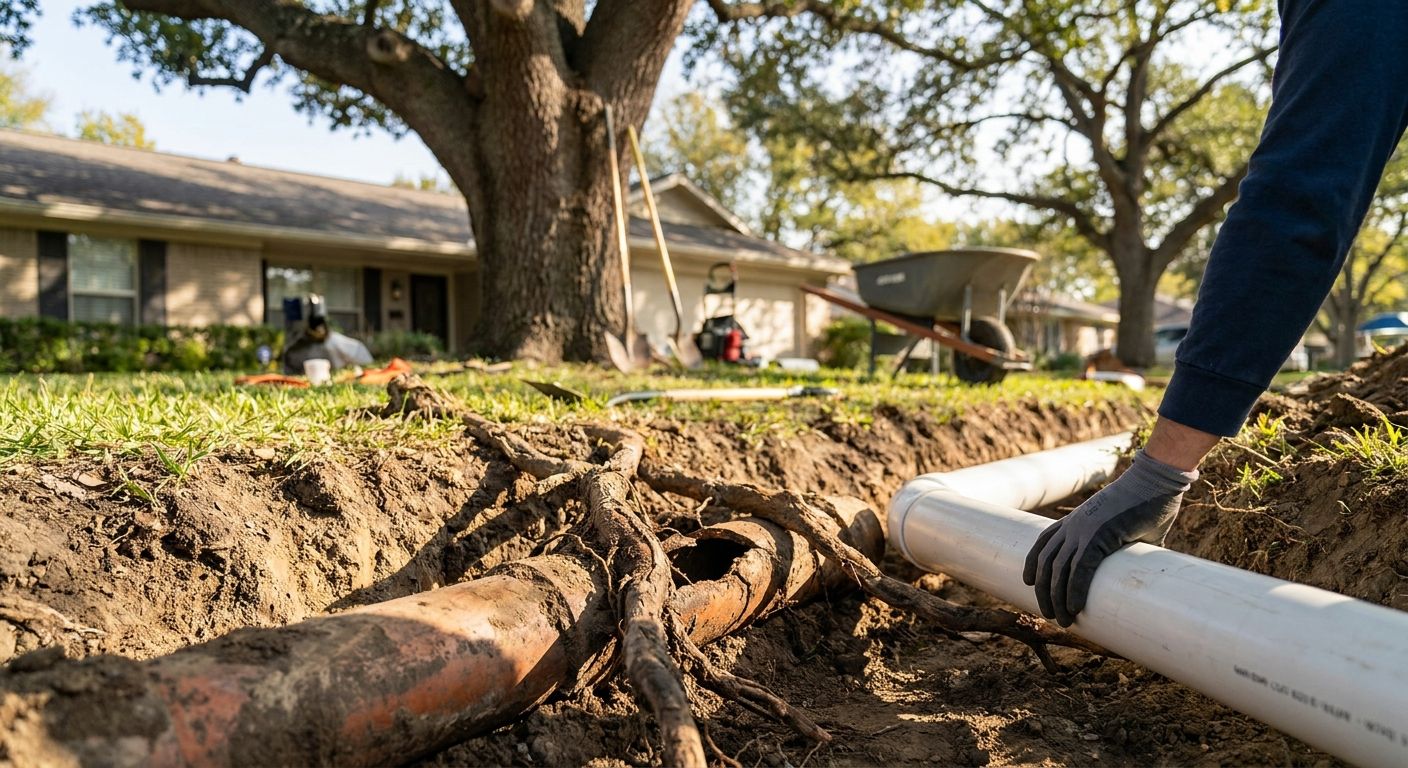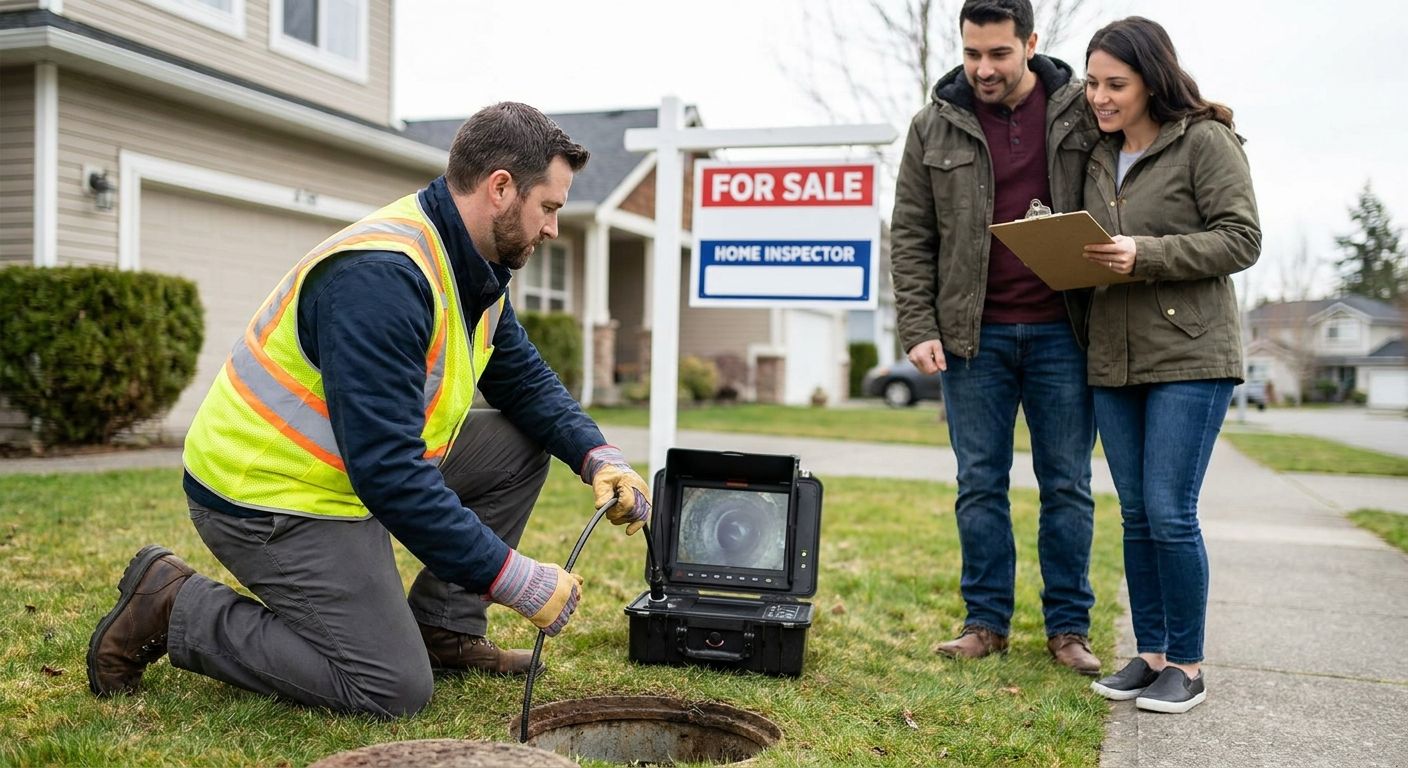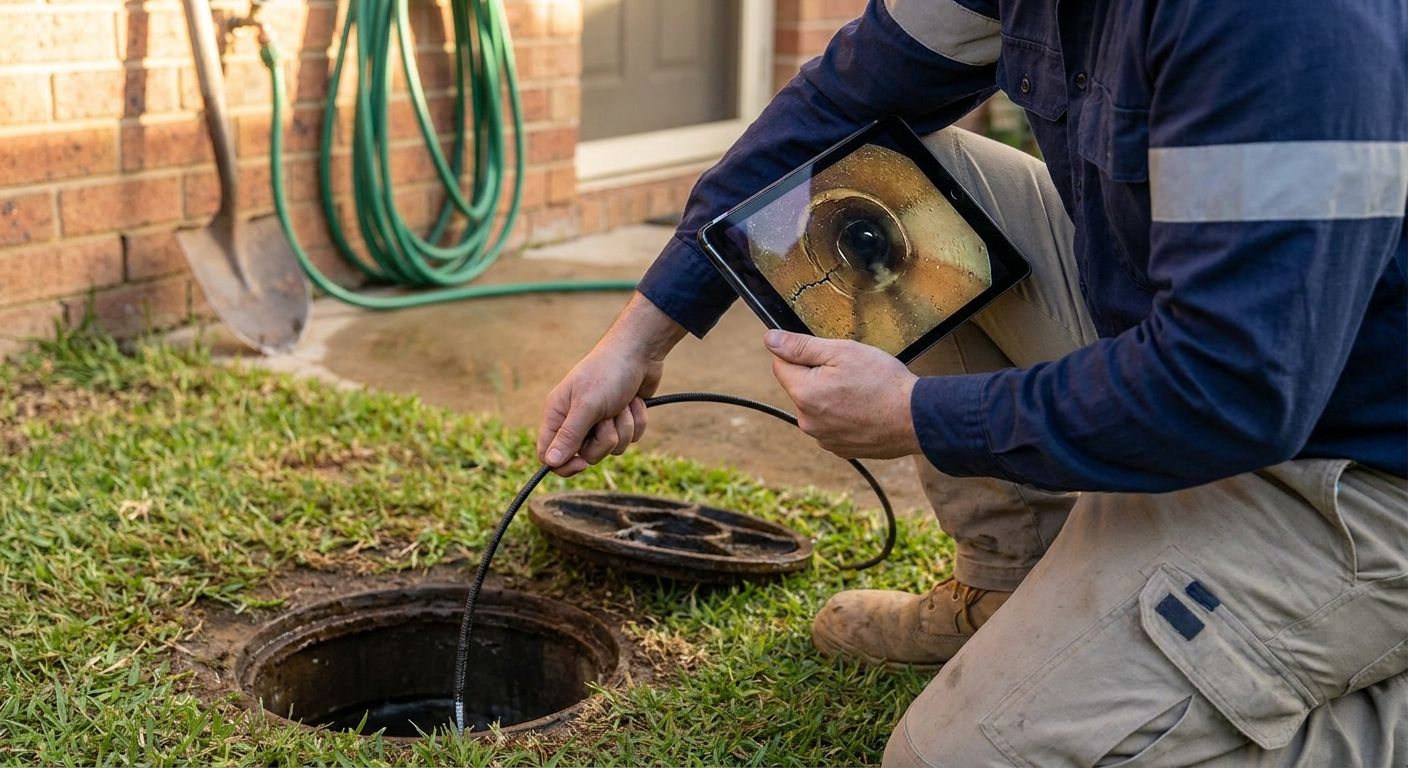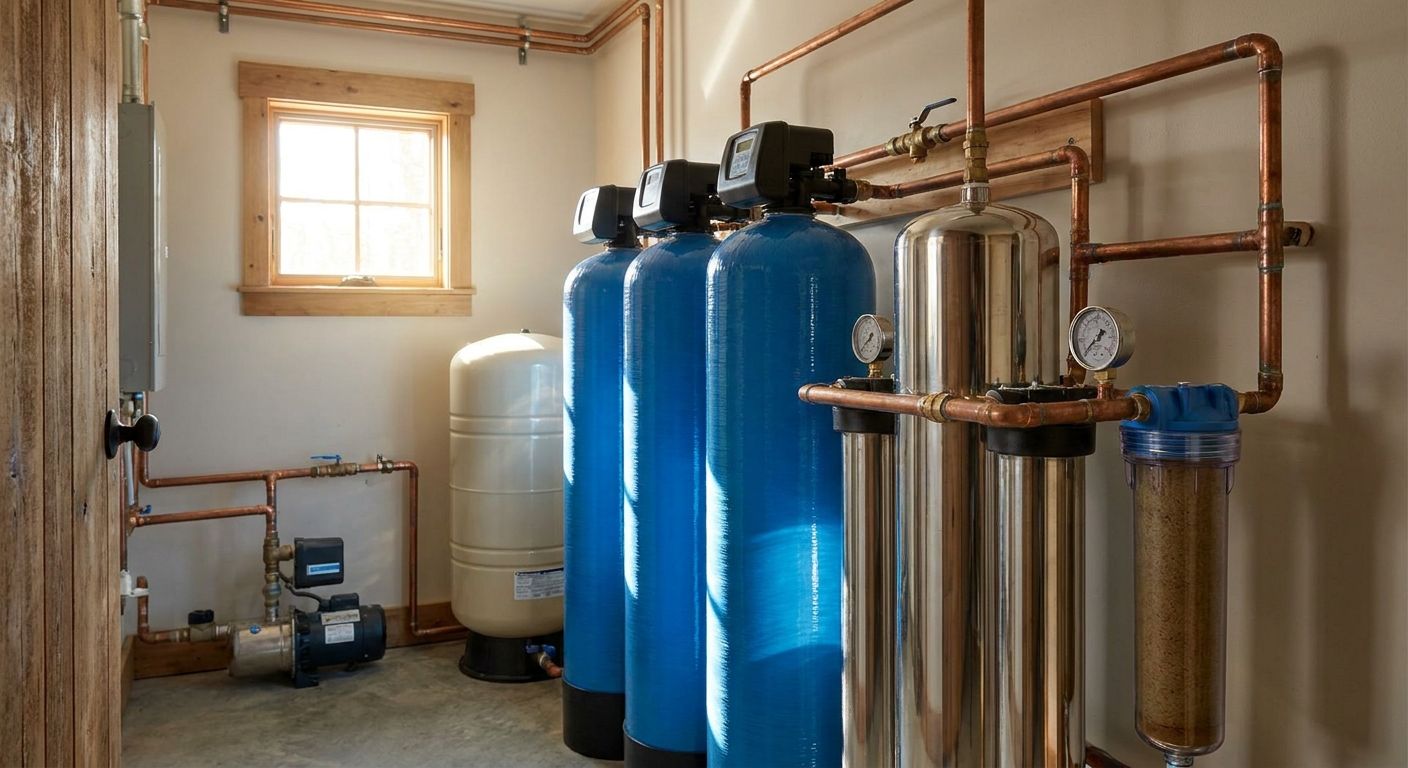
Well water skips the municipal treatment plant, so whatever comes out of the aquifer — iron, sulfur, sediment, sometimes bacteria — goes straight into your pipes, appliances, and glass of water. A whole house water filtration system for well water intercepts that at the point the water enters the home, before it hits a single faucet or the water heater.
- Whole house water filtration for well water homes should target sediment, iron, and hardness as a system, not a single cartridge.
- A sediment pre-filter rated at 5 microns is the minimum baseline for any well setup — skip it and every downstream device clogs faster.
- Iron levels above the EPA secondary standard of 0.3 mg/L call for an oxidizing or air-injection filter, not a basic carbon unit.
- Water softeners solve hardness but not iron staining or sulfur odor — pairing a softener with filtration is the safe pick for most Sacramento-area well homes.
- Skip point-of-use pitcher filters for whole-house problems; they don't protect pipes, water heaters, or fixtures.
Why this matters
City water gets chlorinated, filtered, and tested before it reaches a meter. Well water gets none of that unless a homeowner installs it. Iron above 0.3 mg/L stains sinks and tubs rust-orange within weeks. Sulfur shows up as a rotten-egg smell that no amount of running the tap fixes. Sediment wears through washing machine valves, dishwasher solenoids, and faucet cartridges years ahead of schedule.
The fix isn't a single gadget under the sink. Whole house water filtration for well water treats the entire supply line at the point it enters the house, protecting every fixture, appliance, and water heater downstream in one pass.
Who this is for
This guide is for homeowners on private well systems — common across rural and semi-rural parts of the Sacramento area — dealing with visible sediment, rust staining, sulfur odor, or water that tests hard on a basic test strip. If your water comes from a municipal utility, the concerns and equipment here mostly don't apply; city water is already treated for iron and sediment before it reaches your meter. Flores Precision Plumbing works with well-fed homes across the region and sees the same three complaints repeat: staining, smell, and scale buildup inside water heaters.
What to look for in whole house water filtration for well water
Sediment pre-filtration first
Every well filtration setup starts with a sediment stage, typically rated at 5 microns or finer. Skip this and grit shortens the life of every filter, valve, and cartridge installed after it. A pre-filter is cheap insurance — replacing one $15-30 cartridge every 2-3 months beats replacing a $400 iron filter's media bed early.
Iron and manganese removal capacity
Well water with visible orange or black staining usually carries iron or manganese above the EPA's 0.3 mg/L secondary standard. A basic carbon filter won't touch dissolved iron — it needs an oxidizing filter (air injection or chlorine-based) that converts dissolved iron into a solid form the media can trap. Undersizing this stage is the most common mistake in well-water setups.
Flow rate matched to household demand
A filtration system sized for a 1.5-bath home chokes flow in a 4-bath house running two showers and a washer at once. Match the system's rated gallons-per-minute to your home's peak demand, not average use, or expect pressure drops exactly when you need water most.
Hardness and scale protection
Hardness above roughly 10 grains per gallon (the USGS threshold for "very hard" water) accelerates scale buildup inside tankless and tank-style water heaters alike. Filtration alone doesn't soften water — a separate softener stage handles calcium and magnesium. If your test results show high hardness, treat it as a second, distinct problem from iron or sediment.
Bacterial and sulfur treatment
Rotten-egg odor points to hydrogen sulfide gas, which needs oxidation media or chlorination, not a standard sediment or carbon stage. Wells near septic systems or agricultural runoff should also get periodic coliform bacteria testing — filtration handles taste and odor, not pathogen risk, unless the system specifically includes UV or chlorination.
Maintenance access and media life
Whole-house systems need media replacement or backwash cycles on a schedule — some annually, some every 3-5 years depending on media type and water chemistry. A system tucked into a crawlspace with no service clearance turns a 20-minute maintenance job into an afternoon.
Top picks by well water problem
The sediment-only fix — spin-down pre-filter
For wells with grit and sand but clean-testing water otherwise, a spin-down sediment filter rated at 5 microns handles the job on its own. It's a low-cost, low-maintenance first stage that most other filtration types still need anyway. Verdict: Buy if sediment is your only documented issue; pair it with something stronger if a water test shows iron or hardness too.
The iron-and-rust fix — air injection oxidizing filter
Homes with rust-colored fixtures and staining above the 0.3 mg/L EPA threshold need an air injection system that oxidizes dissolved iron before it reaches a filter bed. These systems run a backwash cycle automatically and typically last 10-15 years on the tank itself, with media replacement on a longer interval. Verdict: Buy for confirmed iron problems; this is the single most common upgrade for Sacramento-area well homes with staining complaints.
The scale fix — water softener paired with filtration
A softener addresses calcium and magnesium hardness but does nothing for iron, sediment, or odor on its own — it needs to sit downstream of an iron filter, not instead of one. Homes seeing white scale on shower doors or reduced water heater efficiency should read through how to choose a water softener for hard water homes before picking a unit, since sizing depends on household size and grain hardness. Verdict: Buy as a complement to filtration, never as a standalone fix for iron or sulfur.
The budget shortcut — carbon-only whole house filter
A basic carbon block filter improves taste and chlorine smell but does essentially nothing against dissolved iron, hardness, or sulfur gas. It's a reasonable stage for wells that test clean except for taste complaints. Verdict: Consider only after a water test confirms no iron, hardness, or sulfur issues — otherwise it's money spent solving the wrong problem.
The overkill option — full reverse osmosis at point of entry
Whole-house reverse osmosis removes nearly everything, but it wastes several gallons of water for every gallon treated and needs a repressurization pump to maintain flow across the house. For most well-water problems — iron, sediment, hardness — targeted filtration handles it at a fraction of the operating cost. Verdict: Skip unless a water test shows contaminants that specifically require RO, like high nitrates or arsenic.
Get your well water tested and sized right
Flores Precision Plumbing evaluates iron, hardness, and sediment before recommending equipment.
What to avoid
- Pitcher or faucet-mounted filters as a whole-house fix. They treat a few cups of water at a time and do nothing to protect pipes, valves, or your water heater from sediment and iron.
- Undersized flow rate systems. A filter rated for 6 GPM in a house that peaks at 12 GPM during simultaneous fixture use creates pressure drops that feel like a plumbing problem but are actually a filtration bottleneck.
- Skipping the water test. Guessing at iron or hardness levels leads to buying oxidizing media for water that's actually low-iron, or a softener for water that's actually the problem is sulfur — money spent solving the wrong issue.
Verdict comparison
| System type | Solves | Typical media life | Verdict |
|---|---|---|---|
| Spin-down sediment filter | Grit, sand | 2-3 months per cartridge | Buy for sediment-only wells |
| Air injection iron filter | Iron, manganese staining | 10-15 years (tank) | Buy for confirmed iron above 0.3 mg/L |
| Water softener | Calcium/magnesium hardness | Salt refill monthly, resin 10-15 years | Buy alongside filtration, not instead of it |
| Carbon-only filter | Taste, chlorine smell | 6-12 months | Consider only if water tests clean otherwise |
| Whole-house reverse osmosis | Broad contaminant removal | Membrane 2-3 years | Skip unless test shows nitrates/arsenic |
Well water with hard mineral content also shortens water heater life faster than city water does — worth checking how to tell if your water heater needs replacing if the unit is more than eight years old and hasn't been paired with filtration until now.
FAQ
What's the best whole house water filtration for well water?
For most well homes, the best setup pairs a 5-micron sediment pre-filter with an air injection iron filter, adding a softener separately if a water test shows hardness above 10 grains per gallon. No single filter type handles sediment, iron, and hardness at once.
How much does whole house water filtration cost in 2026?
Costs vary by well water chemistry, household size, and how many treatment stages are needed, since sediment-only setups cost far less than combined iron-and-softener systems. Get a water test first so the quote reflects your actual problem, not a generic package.
Is a water softener the same as a whole house filter?
No. A softener removes calcium and magnesium hardness only, while filtration targets sediment, iron, or sulfur. Well homes with both hardness and iron need both systems installed together, not one in place of the other.
Do I need a water test before installing filtration?
Yes, a water test is the only way to confirm iron, hardness, and sulfur levels before choosing equipment. Installing an oxidizing filter for water that doesn't actually have high iron wastes money and solves nothing.
How often does whole house filtration media need replacing?
Sediment cartridges typically last 2-3 months, while iron filter tanks and softener resin can run 10-15 years with proper backwashing. Maintenance schedules depend on water volume used and how concentrated the contaminants are.
Can well water damage a water heater without filtration?
Yes, sediment and hardness accelerate tank corrosion and scale buildup inside both tank and tankless water heaters. Homes switching from city to well supply, or vice versa, often see water heater lifespan change noticeably within a few years.
Does whole house filtration remove sulfur smell from well water?
Basic sediment and carbon filters do not remove hydrogen sulfide gas that causes rotten-egg odor; that requires an oxidizing or chlorination stage specifically. Confirm sulfur is the actual cause before buying equipment marketed only for iron or sediment.
Is reverse osmosis necessary for well water?
Whole-house reverse osmosis is rarely necessary unless a water test shows contaminants like nitrates or arsenic that targeted filtration can't remove. For iron, sediment, and hardness, a combined filter-and-softener setup handles it at lower operating cost.
One last thing
The detail most homeowners miss: iron filters and softeners both run backwash or regeneration cycles that use water, so a system sized only for peak household flow without accounting for that cycle time can leave a house short on pressure during the regeneration window, usually late at night. Ask about cycle timing before installation, not after the first low-pressure morning shower in 2026.